


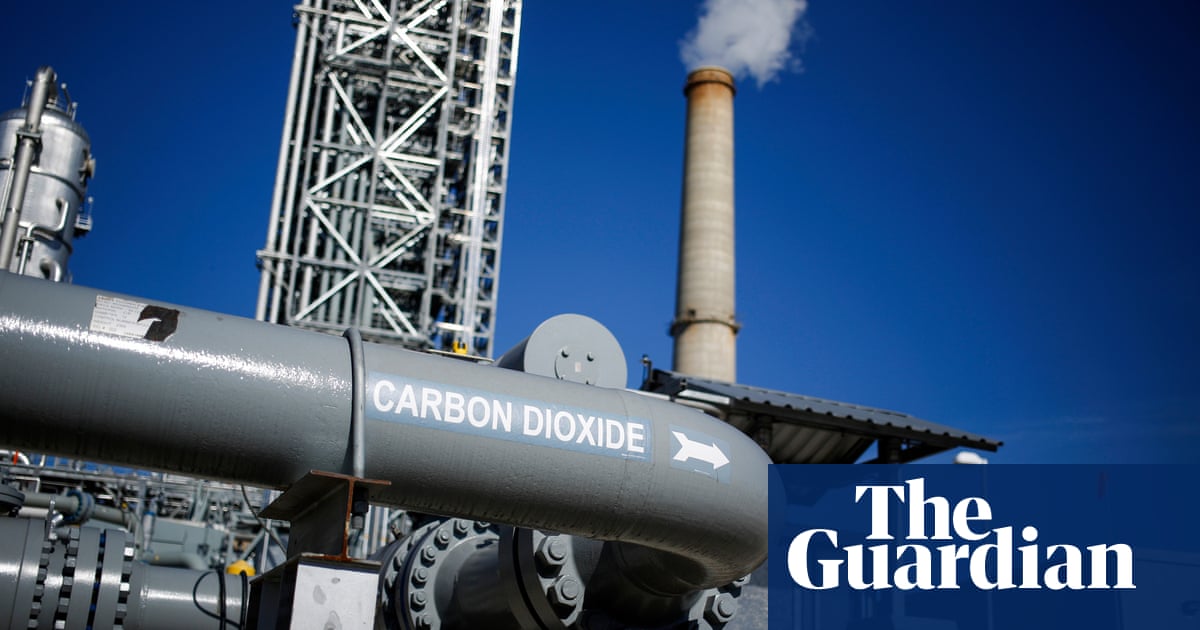
A handful of wealthy polluting countries led by the US are spending billions of dollars of public money on unproven climate solutions technologies that risk further delaying the transition away from fossil fuels, new analysis suggests.
These governments have handed out almost $30bn in subsidies for carbon capture and fossil hydrogen over the past 40 years, with hundreds of billions potentially up for grabs through new incentives, according to a new report by Oil Change International (OCI), a non-profit tracking the cost of fossil fuels.
To date, the European Union (EU) plus just four countries – the US, Norway, Canada and the Netherlands – account for 95% of the public handouts on CCS and hydrogen.
The US has spent the most taxpayer money, some $12bn in direct subsidies, according to OCI, with fossil fuel giants like Exxon hoping to secure billions more in future years.
The industry-preferred solutions could play a limited role in curtailing global heating, according to the Intergovernmental Panel on Climate Change (IPCC), and are being increasingly pushed by wealthy nations at the annual UN climate summit.
But carbon capture and storage (CCS) projects consistently fail, overspend or underperform, according to previous studies. CCS – and blue hydrogen projects – rely on fossil fuels and can lead to a myriad of environmental harms including a rise in greenhouse gases and air pollution.
“The United States and other governments have little to show for these massive investments in carbon capture – none of the demonstration projects have lived up to their initial hype,” said Robert Howarth, professor of ecology and environmental biology at Cornell University. “It is instructive that industry itself invests very little in carbon capture. This whole enterprise is dependent on government handouts.”
With time running out to curtail climate catastrophe, critics of CCS and hydrogen say public money should be focused on proven, less risky solutions such as plugging leaky oil wells, energy efficiency for buildings, transport electrification and renewables that will speed up the green transition.
The subsidies are a “colossal waste of money”, according to Harjeet Singh, global engagement director for the Fossil Fuel Non-Proliferation Treaty Initiative. “It is nothing short of a travesty that funds meant to combat climate change are instead bolstering the very industries driving it.”
The US and Canada have spent more than $4bn to subsidize the capture of CO2 that is then used to extract hard to reach oil reserves, a process known as enhanced oil recovery (EOR), according to the OCI report shared exclusively with the Guardian.
However, proponents argue that more investment is needed in developing CCS and hydrogen technologies, so they can help achieve global climate goals agreed under the Paris accords.
“They are all part of the toolset we need to reach net zero,” Astrid Bergmål, state secretary in Norway’s ministry of petroleum and energy, told the Guardian.
Norway has so far approved $6bn in subsidies for CCS, an energy-intensive process powered by fossil gas – which the country is also expanding.
The new analysis is based on two OCI databases: one tracking public awards distributed to companies from 1984 to 2024 for carbon capture and fossil-based hydrogen research and development, as well as grants for pilot and commercial projects. The other tracks government policies announced since 2020 in the US, Canada, Australia, the EU and countries in Europe that support grants, loans, tax credits, below market insurance plans and other financial incentives.
“Governments are pouring billions of taxpayer dollars into technologies that have consistently failed to deliver on their promises … allowing fossil fuel companies to continue business,” said Lorne Stockman, research director at OCI.
Subsidies from the US, the world’s biggest oil and gas producer where an estimated three-quarters of the CO2 currently captured is used for EOR, could top $100bn, according to OCI analysis.
This is thanks to new policies from the Biden administration, particularly the landmark climate and infrastructure legislation – the 2022 Inflation Reduction Act (IRA) – which after intense industry lobbying expanded tax benefits for both…
Read More: US leads wealthy countries spending billions of public money on unproven