


Editor’s Note: Ekaterina Kotrikadze is a news director and anchor for the independent Russian TV channel Dozhd (TV Rain). The channel shut down in March 2022 and was relaunched from Europe in July 2022. Kotrikadze lives and works in the Netherlands. The views expressed in this commentary are her own. Read more CNN Opinion.
CNN
—
On March 17 there will be an event in Russia which out of habit we will call an election. But of course, there are no elections there anymore. Instead, this is the reappointment of Vladimir Putin to the highest position in the largest country in the world.
In 2003, when Putin was still a young president, I was a student at the Faculty of Journalism at Moscow State University. This was my first parliamentary election. I remember making my way to participate in the voting through the snowdrifts of winter Moscow, freezing.
But it made sense — I was going to give my vote to the liberal Union of Right Forces (URF) party, one of the leaders of which was Boris Nemtsov. Politician Vladimir Kara-Murza ran for the same party. The URF lost then and did not get into parliament.
Nevertheless, opposition continued to exist in the country, and political competition was strong and interesting. I loved bright election campaigns, and even despite the obvious movement towards autocracy, the Kremlin’s competitors were relatively free to act.
They couldn’t win elections, but they could participate, they could speak to independent media and convey their ideas to a significant audience. They could hold rallies and live in Russia.
Eight years later, and now established in my journalism career, I called Nemtsov and asked for an interview during the 2011 parliamentary campaign. We met at one of the polling stations in the center of Moscow. Nemtsov was inspired: he was talking about observers catching violations and falsifications, he believed that the authorities would be held responsible.
The allegations of electoral fraud sparked the largest protests in modern Russian history. Tens of thousands took to the streets.
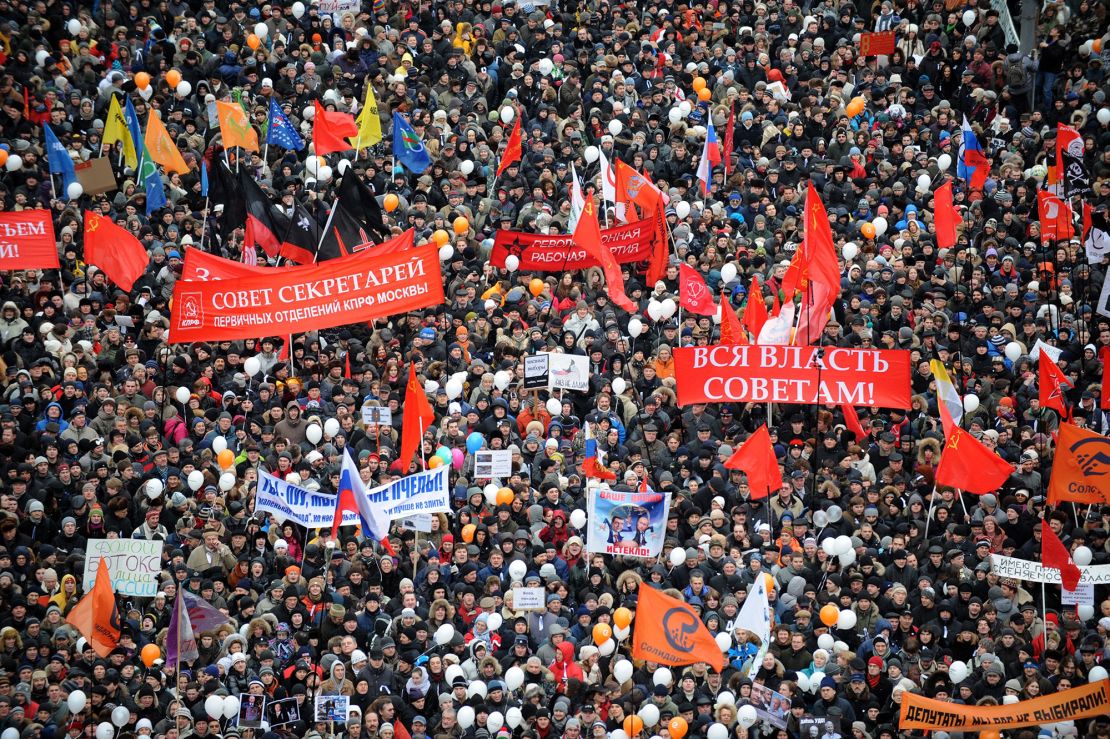
Today such a thing is impossible to imagine. But all these people didn’t disappear — they just went silent.
In 2015, Nemtsov was shot in the back a short distance from the Kremlin walls. In 2023, Kara-Murza was convicted of “treason” and sent to a maximum security colony for 25 years.
I can no longer live and work in my country; with the outbreak of a full-scale war in Ukraine and the introduction of military censorship, the absolute majority of independent media were banned, and journalists including myself were facing criminal charges.
My job in the new reality is to inform Russians about what is happening in Russia, while being in Amsterdam. I can’t go to the polling station, I can’t talk to voters, I can’t ask questions of government officials.
The TV channel Dozhd (TV Rain), where I work, has been declared not only a “foreign agent,” but also an “undesirable organization,” which means that for just one interview with Dozhd or even reposting a video of Dozhd, any citizen of Russia can be charged in a criminal case.
Working in such circumstances is, at first glance, insane, and at the beginning of my forced emigration it seemed that such a thing was simply impossible. But it turned out that you can adapt to anything. We learned how to get videos from all over Russia, we learned how to invent relatively safe ways to interview people from Russia, and it became possible to talk about Russia from outside its borders.
The upcoming elections are taking place without a single influential competitor to Putin. It seems there is no need to even imitate democracy anymore.
Russia is experiencing this shame in depression and grief. A month before voting day, it appears 47-year-old Alexey Navalny was killed in a penal colony beyond the Arctic Circle. I say “killed” because in my view this crime is obvious. For almost 300 days, the leader of the Russian opposition, political prisoner…
Read More: Opinion: Russian elections weren’t always like this