


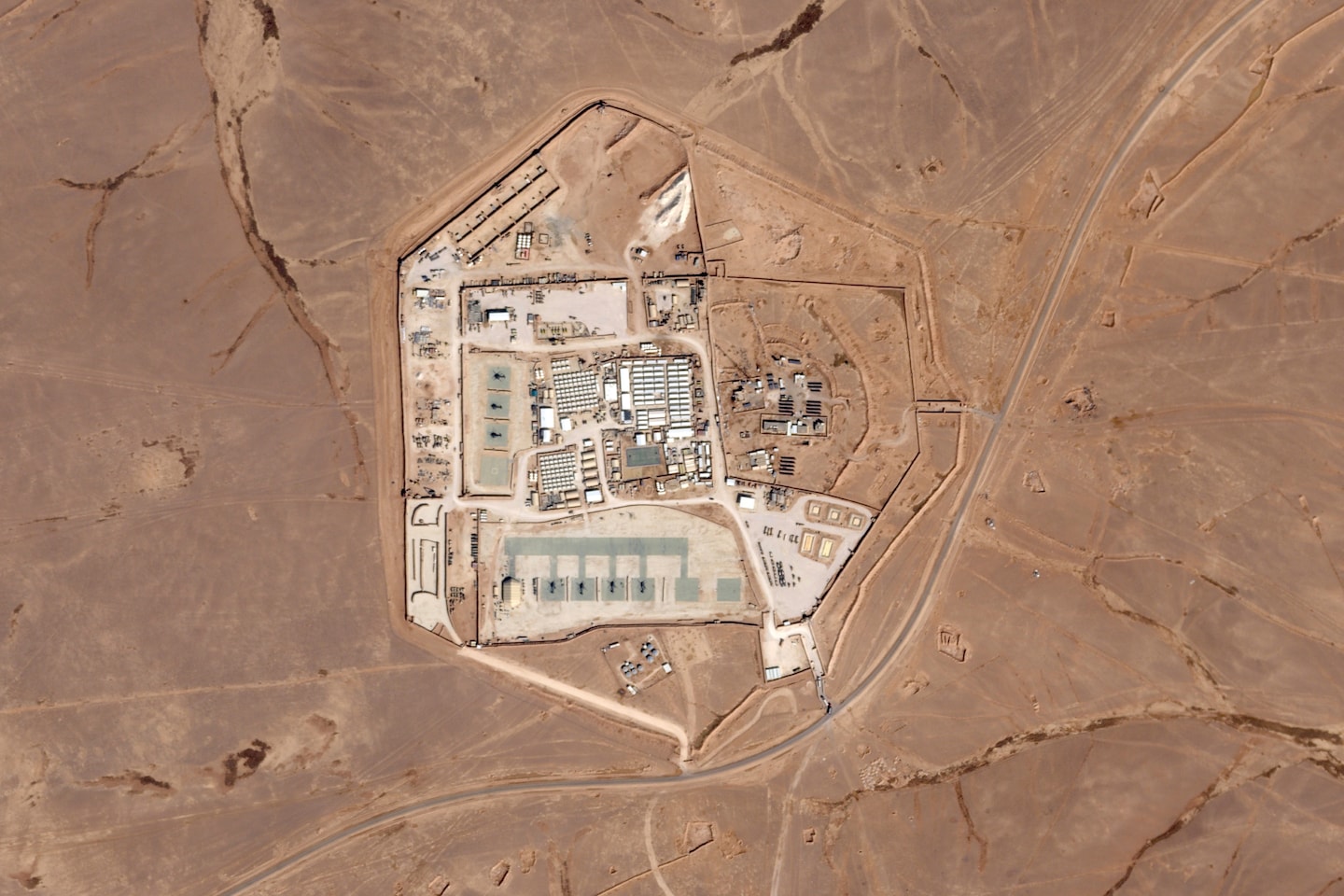
The good luck of U.S. troops finally ran out on Sunday when an exploding drone hit a tiny U.S. outpost known as Tower 22 in Jordanian territory near the borders with Iraq and Syria. Three U.S. military personnel were killed and more than 30 were injured, raising urgent questions about why U.S. air defenses failed to work. President Biden attributed the attack to “radical Iran-backed militant groups operating in Syria and Iraq” and vowed, “We will hold all those responsible to account at a time and in a manner of our choosing.”
Clearly the deaths of U.S. service members necessitates a greater response than what the United States has so far done with limited airstrikes — most recently in Iraq on Tuesday — against Iranian-backed militias. But it is not clear what that response should be, because it is always devilishly difficult to know how to respond to proxy warfare.
The United States did not bomb China or the Soviet Union even though they were providing munitions — and even pilots — who were killing U.S. service members in the Korean and Vietnam wars. The Soviet Union did not bomb the United States when the United States provided munitions to Afghan resistance fighters who were killing Red Army troops in the 1980s. Today, Russia is not bombing the United States or even European members of NATO even though they are providing munitions to Ukraine that are being used to kill Russian invaders. Should the United States now respond to the Iranian-orchestrated provocations by bombing Iran?
That is the predictable advice of arch-hawk Sen. Lindsey Graham (R-S.C.): On Sunday, he called on Biden to “strike targets of significance inside Iran.” Sen. John Cornyn (R-Tex.), another hawk, demanded that Biden “Target Tehran.” But recall that not even President Donald Trump was willing to attack inside Iran. In 2019, Trump came close to ordering airstrikes in Iran in retaliation for Iran shooting down a U.S. surveillance drone, but he changed his mind at the last minute. And for good reason: Though Iran has been sponsoring terrorism against the United States since the Iranian Revolution in 1979, all U.S. presidents have been cognizant that getting embroiled in a major conflict with Iran is in no one’s interests.
Iran’s Houthi allies are already attacking shipping in the Bab el-Mandeb Strait, a maritime chokepoint that handles nearly a third of the world’s container ship traffic, thereby raising shipping costs. Now imagine if Iran were to use drones, mines and missiles to close the Strait of Hormuz, an even more important chokepoint that handles about a third of the world’s seaborne oil trade. A conflict with Iran could send the U.S. economy, and other economies only now overcoming pandemic-era inflation, reeling.
And that is far from the only deterrent that Iran possesses: It has supplied Hezbollah, its ally in Lebanon, with at least 150,000 missiles targeted at Israel. The last thing Israel needs, while its troops are embroiled in a conflict in Gaza, is a two-front war. The Houthis also have the potential to resume missile and drone attacks against Saudi Arabia and the United Arab Emirates, notwithstanding those two countries’ efforts to improve relations with Iran over the past year.
But though the Biden administration should refrain from bombing Iran absent further provocation, it’s clear that it needs to do more than it has been doing in pushing back against Iran’s aggression. Hard as it might be for the White House to swallow, it needs to take a page from the Trump administration’s book. In 2020, the U.S. military used a drone strike in Iraq to kill Maj. Gen. Qasem Soleimani, commander of the Islamic Revolutionary Guard Corps’ Quds Force, which is responsible for waging proxy warfare against Iran’s enemies. That did not stop the Quds Force from continuing to support militias across the region, but, according to retired Gen. Kenneth “Frank” McKenzie Jr., then the head of U.S. Central Command, the killing of Soleimani did disrupt and deter Iranian attempts to target U.S. personnel in Iraq.
The Biden administration has been understandably reluctant to get trapped in an escalatory spiral with Iran, but it’s clearly time to show Iran…
Read More: Opinion | Biden should target Iranian operatives after the killing of U.S.