


:quality(70)/cloudfront-us-east-1.images.arcpublishing.com/adn/LAWFX2YJUFGZXCD6QTLGUHVHGU.jpg)
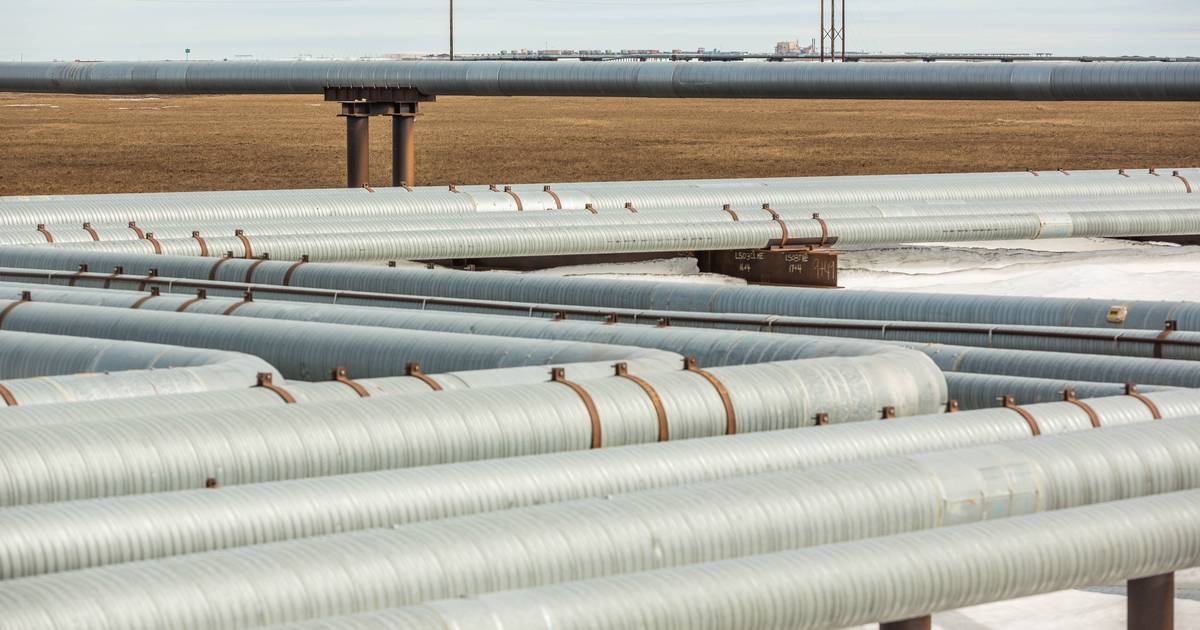
The trans-Alaska oil pipeline is now moving less than a fourth of the oil it did in the 1980s when North Slope oil fields were at their peak. We know oil fields eventually decline, and some of the large “legacy” North Slope fields are declining faster than expected.
But there’s good news. First, we used to depend on oil to fund most of the state budget. The Permanent Fund now does that. But oil is still important and will be for a long time.
There’s good news, too. ConocoPhillips is busy developing its new Willow oil field, and Australian-owned Santos, Ltd., with its partner, Repsol, based in Madrid, are in construction on its new Pikka field.
The combined new production from Willow and Pikka will reverse the decline of oil moving through the pipeline, at least for a while.
If the estimated productivity of Pikka and Willow pan out, in a few years we’ll put more oil production in the pipeline than we lose through the decline in the large fields.
Pikka and Willow won’t bring back the state oil revenue boom of the 1980s – these aren’t Prudhoe Bay-type fields – but the new oil will help.
However, being cautious with expectations is wise. The state Department of Natural Resources, for example, prudently handicaps its annual oil production forecast with risk factors because it’s possible some of the new discoveries may not pan out.
Oil and gas companies working in Alaska have experienced this, although they naturally like to talk more about successes than flops. But a few examples are in order, as caution flags.
Not long after the pipeline began operating in 1977, the oil companies started developing other oil finds near Prudhoe Bay, which was the first and largest field discovered. One new one was the Kuparuk River field west of Prudhoe, which has more than met expectations. But another was Lisburne, an oil deposit underlying the eastern part of the Prudhoe field, which was disappointing.
In anticipation of the hoped-for Lisburne oil, oil companies built a major oil and gas plant in the eastern part of Prudhoe Bay field to process the expected oil. The flow turned out to be less than half of what had been predicted, leaving a lot of stranded investment.
However, the companies got busy and eventually turned what appeared to be a flop into success after they developed a number of smaller “satellite” oil accumulations near the underused process plant. Things worked out in the end for the Lisburne investment.
Not so with Badami, second on our list of cautionary tales. Badami was a modest discovery about 25 miles east of Prudhoe. It was always thought to be small but BP, then a major North Slope producer, purchased it with ambitious plans. A pipeline was built along with needed infrastructure, including a processing plant, airfield and operations center.
BP soon wished it had tested Badami’s exploration wells more thoroughly. Badami fizzled, mainly due to unexpected problems in the underground producing reservoir.
BP tried hard to make Badami work, but was unsuccessful and, after several years, sold it to a small independent company, Savant Alaska, which hoped to make the small field profitable by lowering costs and drilling more wells.
Badami is still limping along but has generally been disappointing.
However, just as at Lisburne, the infrastructure investment at Badami may eventually make it a success because other oil discovered nearby would use Badami’s pipeline.
For example, Bill Armstrong, an aggressive explorer with a proven track record (he led the group that found Pikka) is busy drilling in the area and has high hopes.
Yet another cautionary tale is from Point Thomson, which is further east of Badami. This is a large natural gas discovery that also has liquid condensates, a form of natural gas liquid. ExxonMobil and BP, a former part-owner, poured a reported $4 billion to $6 billion into Point Thomson, but the project has been beset with technical challenges and is producing less than was hoped. As an investment, this has been a disaster.
But again, there are known oil discoveries in the area, and these could benefit from the pipeline built for Point Thomson. One of these finds is Sourdough, an undeveloped oil deposit virtually on the border of the Arctic National Wildlife Refuge. Also, if a North Slope gas pipeline is ever built, the gas at Point Thomson will be produced, allowing some of the investment to be recouped.
Further west, there have also been disappointments. As at Badami, ConocoPhillips’ GMT-1 project in the National Petroleum Reserve, a small project, has not met its expectations due to unexpected reservoir problems.
This is all a mixed bag, of course, because there have been real successes…
Read More: OPINION: Alaska’s North Slope oil and gas development is a story of dark clouds