


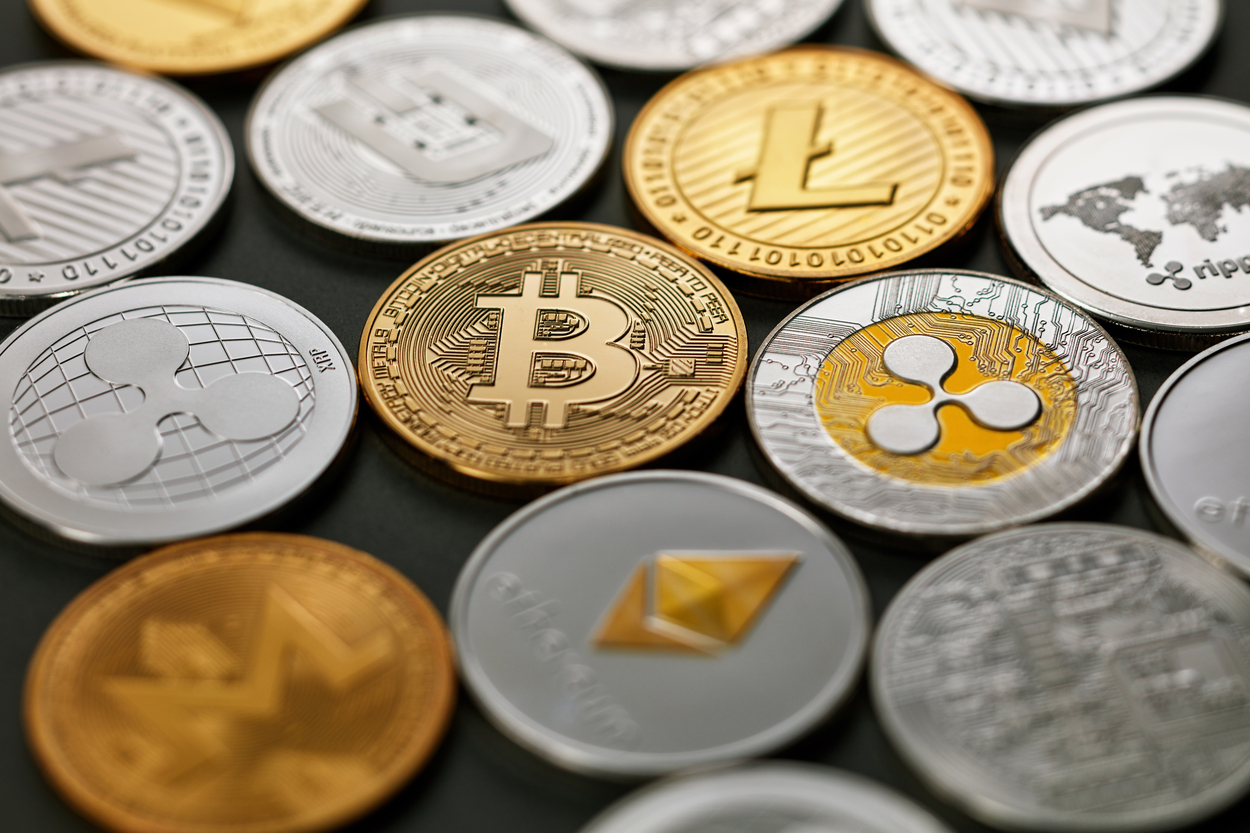
Bitcoin is the indisputable king of the crypto market, but it’s not the only crypto. Litecoin, an alternative asset created to be “a lighter version of Bitcoin,” is a heavy contestant. Let’s take a look at both coins and their similarities and differences.
Bitcoin, the first cryptocurrency, was launched in 2009 and introduced blockchain technology in the landscape, along with a novel way to perceive currencies. Litecoin was released in 2011, as a fork of Bitcoin, and attempted to fix some issues in the original crypto. Over time, each project has developed its own features, but they remain closely related. There are plenty of exchanges where it’s possible to buy Litecoin or Bitcoin.
Exploring the Commonalities Between Bitcoin and Litecoin
Since Litecoin is a fork of Bitcoin, they are quite similar in a lot of ways. Although Litecoin made some fundamental changes, there are broad aspects they share.
Decentralized Nature
Decentralization is at the core of blockchain technology. Cryptos differ from fiat currencies, which are backed by central banks and governments, who control their emission and value. Blockchains, on the other hand, rely on the people running nodes to verify transactions and secure the network.
Proof-of-Work Consensus
Both Bitcoin and Litecoin validate their transactions using a Proof-of-Work (PoW) consensus mechanism. This means that miners must run computational programs on specialized devices, called ASICs. These devices compete to solve complex mathematical problems, and the one who solves them first gets the block reward. There are also mining pools, where a group of users shares their computational power to increase the chance of solving the block and distribute the reward. This way, new blocks are created and validated across the network, securing the decentralization concept.
Limited Supply
A defining aspect of Bitcoin is its limited supply. There will only ever be 21 million BTC, and this cannot be altered unless all network participants agree to it. This feature was introduced to avoid inflation, a common issue in fiat currencies. Other crypto assets, like ETH, have an infinite supply and can theoretically be mined forever. Litecoin, following Bitcoin’s path, also enforced a limited supply in its blockchain, with a total of 84 million LTC.
Open-Source Development
Aligned with the decentralized nature of cryptocurrencies, Bitcoin and Litecoin are both open-source projects. Their codebases are available for anyone to check, audit, and also participate. The development is usually concentrated in a few groups, but any developer can propose changes and improvements to both the Bitcoin and Litecoin code. This helps secure the network, as anyone can verify the code, and there’s a greater chance to detect any error. While these factors are quite positive, it’s important to check a Bitcoin or Litecoin analysis before making any investment.
Navigating the Differences Between Bitcoin and Litecoin
We have reviewed the similarities between Bitcoin and Litecoin. But although Litecoin was created by modifying the code of Bitcoin, there were some significant changes. Let’s take a look at some of them.
Mining Algorithm
As we said, Bitcoin and Litecoin use a Proof-of-Work consensus mechanism, but they differ in the mining algorithm they employ. Bitcoin uses SHA-256 (Secure Hash Algorithm 256-bits), while Litecoin uses Scrypt, a less resource-intensive algorithm. This difference determines the type of device used for the mining process. For example, there are ASIC devices created to mine Bitcoin, but these same devices cannot be used for Litecoin, and vice versa.
New Block Generation Time
Along with the different mining algorithms, Litecoin also reduced the block generation time, attempting to make the coin more attractive to merchants. Bitcoin blocks are created every 10 minutes because this adds another layer of security to the network. The long confirmation time and the distributed ledger prevent attacks on the blockchain. Litecoin, on the other hand, generates new blocks every 2.5 minutes, a quarter of the time it takes on Bitcoin. While this may diminish Litecoin’s security, the blockchain hasn’t been successfully attacked throughout its long history.
Transaction Confirmation Speed
The reduced block time impacts the time it takes to confirm transactions, and that’s why Litecoin is more appropriate as a means of payment. In the Bitcoin network, merchants are advised to wait for 6 confirmations. Since blocks are created every 10 minutes, it takes around an hour to consider the transaction done. Litecoin’s 2.5 minutes block time reduces the time it takes for merchants to be certain their payment is…
Read More: Litecoin vs Bitcoin — Common Grounds and Distinct Differences