


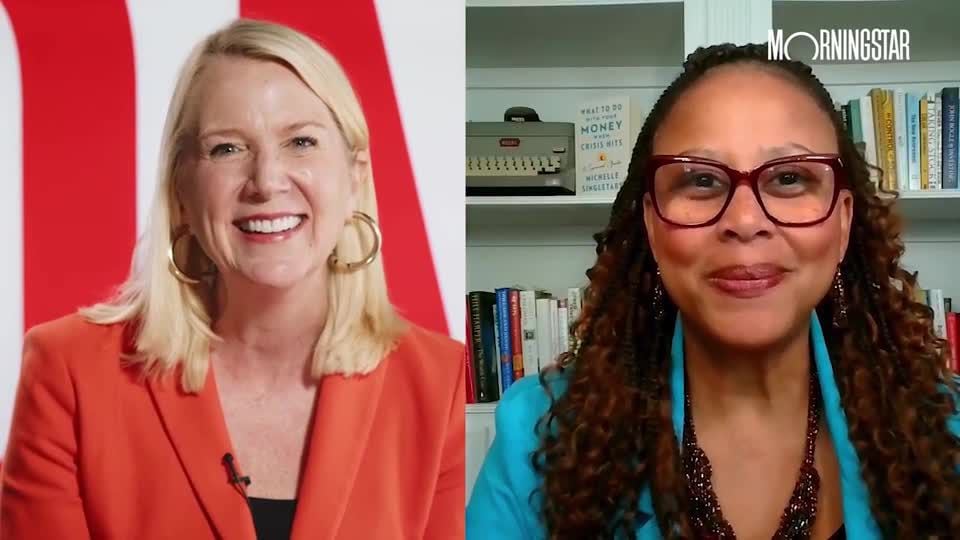
Christine Benz: Hi, I’m Christine Benz from Morningstar and welcome to the How to Retire podcast. It’s a companion to my book, which is also called How to Retire. Each episode will provide a bite-sized lesson about how to do some aspect of retirement well.
One of my favorite personal finance journalists is author and Washington Post columnist Michelle Singletary. Happy to say that I’ve gotten to know Michelle a bit through our regular conversations. In her work and presentations, she frequently discusses her thriftiness. So, I wanted to discuss with Michelle an issue that I’ve observed through talking to a lot of retirees—that if they’ve been good savers like Michelle, it’s difficult to flip the switch into spending. I asked her to discuss that transition in her own household.
Michelle, thank you so much for being here.
Michelle Singletary: Oh, it’s my pleasure always to talk to you.
Transitioning From Saving to Spending in Retirement
Benz: Well, I love talking to you, too. And I wanted to talk to you specifically about this idea of moving from savings mode to getting into spending mode in retirement, which is something that you and I have talked about over the years. In your contact with your readers, have you heard from them that this is a difficult transition that they have to make when they get into retirement, that they begin spending from their portfolios?
Singletary: It is. Other than what the market is doing, it is the top reason why people have so much anxiety. There’s a lot of press about how to spend down, what percentage, 3%—you guys did a great report about, is it the new 3 or a 4?—but really what I’m finding when I talk to both my readers and in my community and other people who’ve retired, like my husband, is that, if you’ve done everything you’re supposed to do, “I’ve spent the last 20 or 30 years saving. And now you’re telling me I got to spend?” And it’s so difficult, the psychological block to spend down as opposed to save up. It’s tremendously difficult. It was for me, it is for me. My husband’s OK. He’s like, “Let’s spend that money. We’re not leaving all that money to children.” But, you know, I’m still working. He’s retired. And I’m going to be really honest. It’s really stressful for me because, you know, I am a saver. I’ve been a saver since I was a wee little person. And even though we haven’t tapped his retirement money yet, you know, it’s coming. And I just, I’m like, “How can I do this and not be afraid?” even though I know that there’s no reason for me to be afraid.
How to Plan for Retirement When Your Spouse Doesn’t Retire at the Same Time
Benz: Yeah, so I wanted to discuss your personal journey, Michelle, which I think is an interesting element in this with your husband retiring, but you’re still working. Can you talk about how that has felt that you’re looking at spending being upon you eventually and thinking about how you will shift in terms of your mindset as you make that transition?
Singletary: Well, I’ve listened to people like you and other experts. I’m a personal finance expert, but I have to talk to other experts for my personal life.
Benz: Same.
Singletary: Sometimes it’s hard to practice what you preach, but I do try to do that. And so my husband and I actually started preretirement planning probably like 20 years ago, if you can believe it, because we knew we wanted a certain glide path into retirement. And so it started with making sure that we had no debt for college for our children and that we were saving in our respective retirement plans. We had the right insurance. We’re trying to be healthy so that we can not have so much healthcare costs. And one of the major things that we decided was that we would not take a mortgage into retirement. And so whoever retired first, if we retired together, we would not have a mortgage. And so over the last 30 years, we’ve been putting money away toward the principal of the mortgage. And when we did refinance, we financed down from a 30 to a 15. So we did all those things to put it in place so that once we retired, we could not be so anxious. And that’s the plan. And it went smoothly. All of that happened. So you’re asking me, why am I still freaking out?
Because when you look that, there’s not going to be those regular paychecks coming in. We went from a household of having four paychecks a month to two paychecks a month. And that math is like driving me insane right now. And so that’s the difficulty. And then you hear all the stuff happening with the markets up or down, and it…
Read More: How to Retire: Transition From Saving to Spending