


According to Tad Steinberg, speaking during the 2024 AMUG Conference, Siemens Energy has made significant progress with additive manufacturing-enabled hydrogen combustion and gas turbines.
Steinberg, an Air Force veteran based in Siemens Energy’s additive manufacturing application center in Orlando, Florida, has extensive experience in aerospace, industrial gas turbines, and metal additive manufacturing.
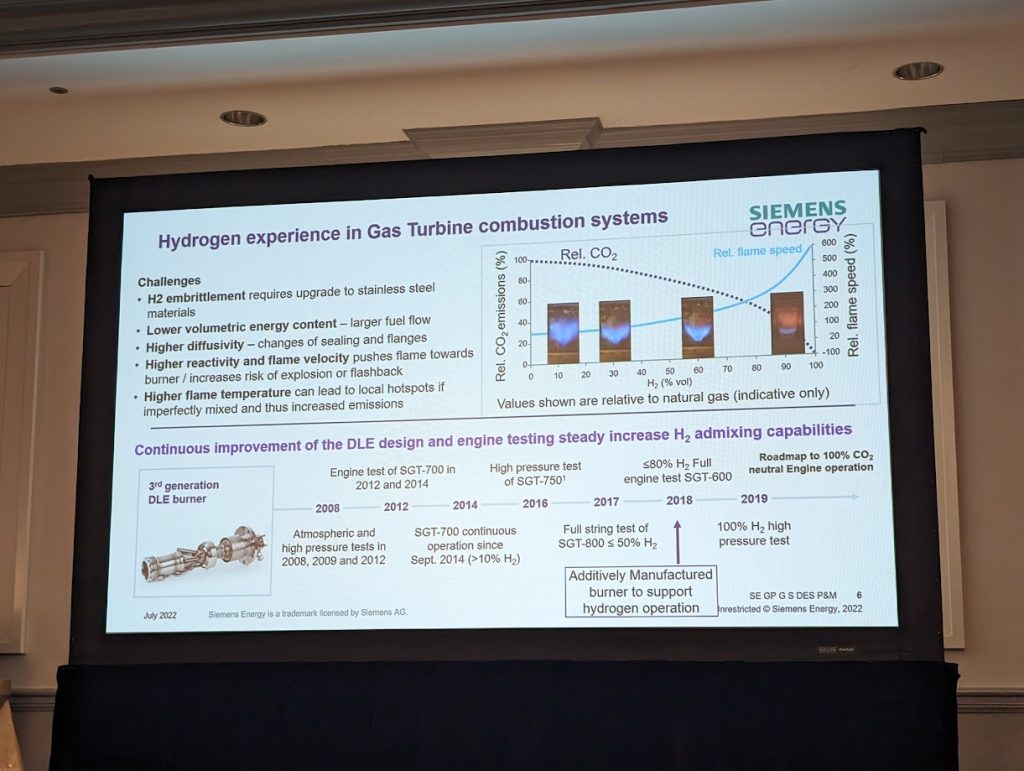
Hydrogen combustion and gas turbines in the additive manufacturing space
Steinberg explained Siemens Energy’s intent that by 2030, every new gas turbine they sell will have the capability to run on 100% hydrogen, a significant shift from their traditional focus on natural gas and methane. This is an ambitious goal highlighting the company’s dedication to innovation in the energy sector, despite uncertainties about customer adoption.
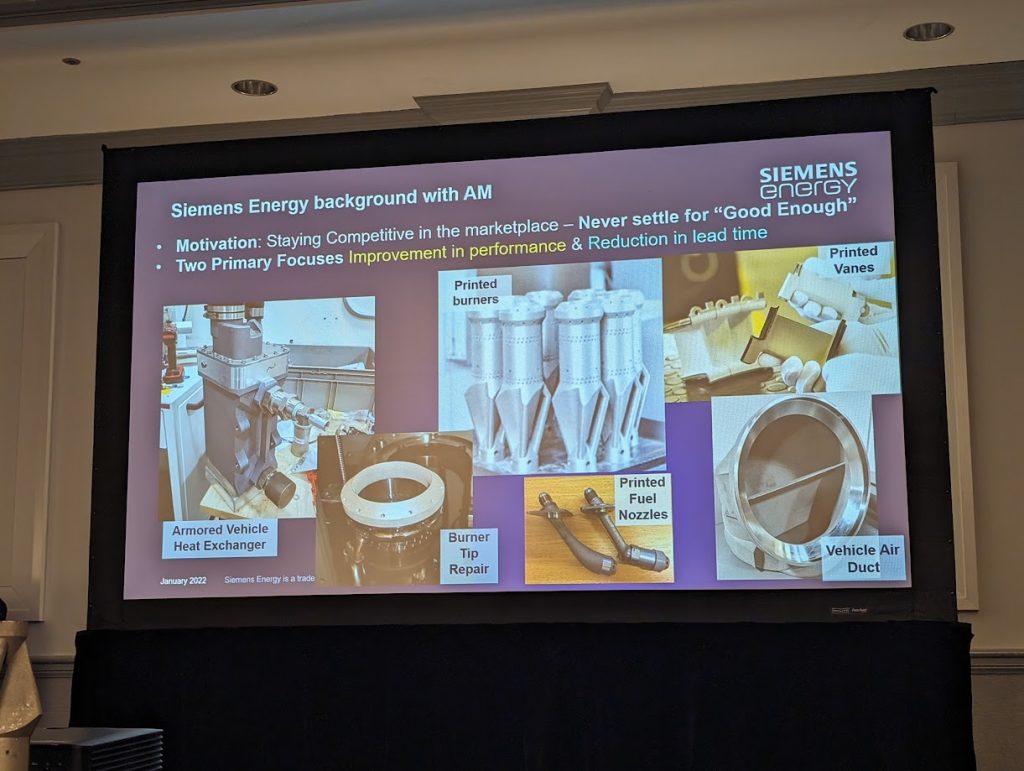
A crucial aspect of this transition is Siemens Energy’s utilization of additive manufacturing, which has played a pivotal role in overcoming the challenges posed by hydrogen. The company, both a user and a service provider in the additive manufacturing space, has been leveraging this technology since 2008. Steinberg underscored its importance, saying, “Additive has really helped us accelerate getting into that [hydrogen] space because of the challenges that hydrogen brings to the table.”
Discussing Siemens Energy’s broader activity in the hydrogen process, Steinberg noted the company’s involvement in the entire value chain, from hydrogen production using electrolyzers to storage and transmission. “Siemens Energy is very engaged in the entire hydrogen process,” he remarked, emphasizing their approach to adopting hydrogen as a viable fuel source.
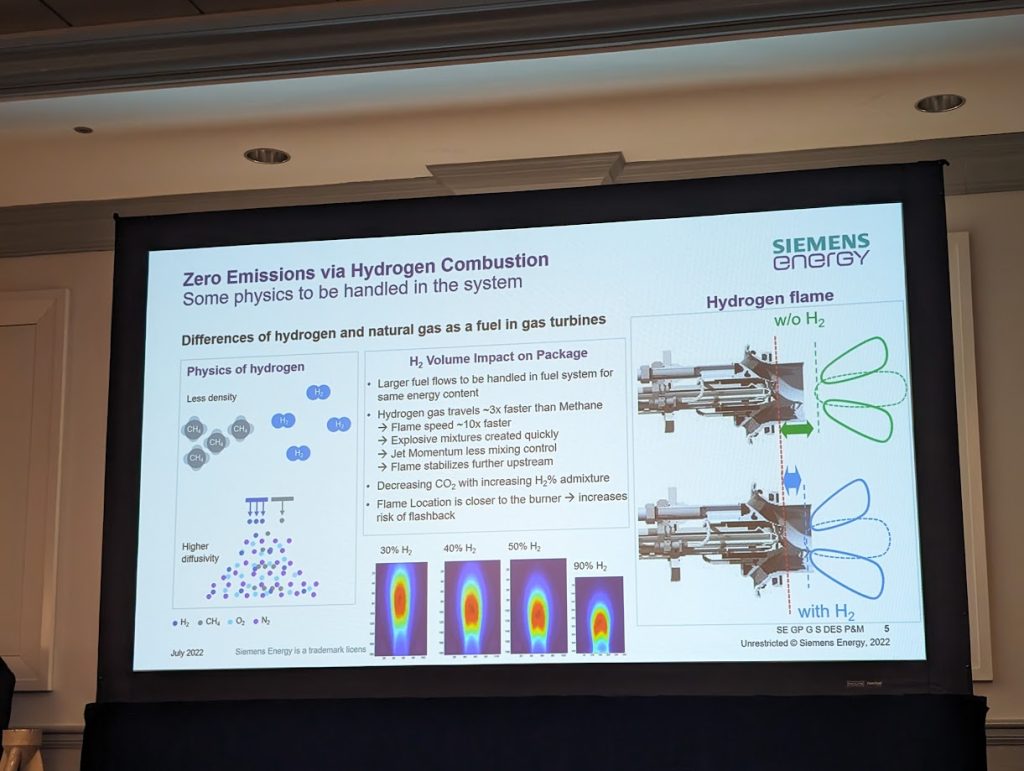
Modifying a gas turbine burner for hydrogen combustion
The presentation detailed some of the complex challenges that hydrogen combustion poses for gas turbines and how additive manufacturing has been a pivotal tool in addressing these challenges. Steinberg highlighted the specific difficulties encountered when transitioning from natural gas to hydrogen, focusing on the substantial differences in flame behavior and fuel system requirements.
One of the primary challenges Steinberg identified was the significantly faster flame speed of hydrogen compared to natural gas. He explained, “the flame speed [with hydrogen] is so fast and very close to the outlet of the burner,” which necessitates adjustments in the burner design to prevent issues such as flashback. The increased flame speed is ten times faster than that of natural gas, posing a unique set of challenges.
Additionally, hydrogen combustion requires a higher volume of fuel to achieve the same power density, further complicating the transition. Steinberg pointed out that components such as sealing and piping that work with natural gas might not be suitable for hydrogen due to these differences. He said, “You have to flow a lot more to get the same power density.”
The role of additive manufacturing in Siemens Energy’s approach to these challenges has been vital. Additive manufacturing has allowed for rapid prototyping, enabling the company to swiftly iterate and test new designs to meet the unique demands of hydrogen combustion. “Additive is just one lever to pull to be able to help address those,” Steinberg noted, underscoring its importance in the developmental process. Highlighting one specific achievement, Steinberg mentioned the SGT 600 gas turbine, which has successfully run on 100% hydrogen in their workshop.
Steinberg also outlined Siemens Energy’s progressive approach using additive manufacturing since 2008, detailing how the company’s focus on hydrogen has evolved over time. From initial tests with low hydrogen percentages in 2012 to more substantial advancements in recent years, Siemens has steadily increased the hydrogen capability of its burners. By 2018, the company had made significant strides, integrating additive manufacturing into its development cycle for rapid prototyping and testing.
Emphasizing the scale of the challenge, Steinberg reiterated the goal of achieving 100% hydrogen capability by 2030. “100% is a big number. It’s a big challenge,” he admitted.
3D printing burners for gas turbines
Steinberg outlined a phased approach to modifying gas turbines for increasing levels of hydrogen usage, highlighting the necessary changes in the turbine’s architecture and control systems as hydrogen concentration increases.
He discussed the need for a comprehensive transformation of the turbine’s components and…
Read More: How Siemens Energy is using additive manufacturing to take hydrogen operation of