


Leaders across the Western states are developing more transmission lines to improve the region’s electrical grid. This is a noble and necessary effort.
Earlier this month, Arizona Gov. Katie Hobbs and New Mexico Gov. Michelle Lujan Grisham called for more interstate cooperation to ensure a robust and flexible power grid. This way, when one area is experiencing extreme temperatures or a plant failure, other areas can quickly support the increased need.
“Our message to the rest of the West is clear,” the governors wrote. “By working together, we can break ground on the transmission projects that will fortify our grid — ensuring reliable electricity for our homes and businesses — and power our region’s economic growth.”
Arizona desperately needs more electricity
People and industries are flocking to Arizona, not only for our mild winters, but also our pro-business policies and relative safety from natural disasters. Semiconductor facilities, data centers and other energy-intensive industries will only succeed with a healthy supply of abundant, reliable and affordable electricity.
Transmission lines are one crucial way to fill that need. But the creation of new power sources is just as, if not more, important.
In their joint op-ed, the governors touted recent efforts to expand transmission capabilities, including the SunZia Wind project that will provide “up to 3,500 megawatts of mostly renewable energy.”
That’s great, as far as it goes. But Arizona currently generates 7.5 million megawatt hours a month, rendering SunZia’s contributions welcome, but quite small.
If past is prologue, our energy needs will only increase in the future. And by a lot.
Data centers, factories use a lot of power

Between 1950 and 2022, the population of the U.S. a little more than doubled. Over that same time, our electricity use increased by 14 times.
The U.S. Energy Information Administration (EIA), which ultimately reports to President Biden, predicts that global energy consumption will increase 34% from 2022 to 2050. A major reason for this is our growing reliance on technology.
Back in 2018, computers consumed about 1-2% of the global electricity supply; just two years later, that was estimated to be 4-6%. If we continue at this rate, by 2030, it’s projected to increase between 8% and 21%.
Nuclear power is safe:Let’s build more in Arizona
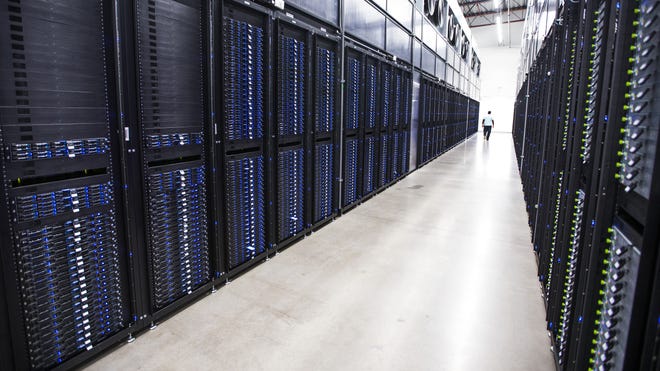
This directly impacts Arizona as a prime location for large data centers.
A facility such as Digital Realty at 120 E. Van Buren St. in Phoenix, uses about 10 MW, but many use far more power. Once completed, the Stream Data Center in Goodyear will support up to 280 MW.
The massive TSMC facility in north Phoenix is expected to use 200 MW, and that’s just for Phase 1.
The future is solar … and natural gas and nuclear
What’s true locally is just as true globally. The worldwide digital cloud already uses twice as much electricity as the entire nation of Japan, a need that will only grow with the emergence of AI.
Big tech needs energy so badly, Microsoft is using AI to work through regulatory and licensing documents to get nuclear power plants approved more quickly.
When our political and business leaders ask if we should use renewables, natural gas or nuclear, the correct answer is yes. We need every energy source available to power our tech-dependent lives.
And despite many politicians promising a complete green energy transition in the near future, the federal government they lead is much more realistic.
The EIA projects that by the year 2050, America will be a little less reliant on coal, a little more reliant on renewables, while the rest of the energy mix looks about the same as today.
The future of energy for Arizona is … everything. Nuclear, natural gas, wind and solar, oil, hydropower, maybe even some coal.
All with a lot more transmission capability. We’re going to need every megawatt.
Jon Gabriel, a Mesa resident, is editor-in-chief of Ricochet.com and a contributor to The Arizona Republic and azcentral.com. On X, formerly Twitter: @exjon.
Read More: Extreme heat isn’t the only thing driving Arizona’s electricity demand