


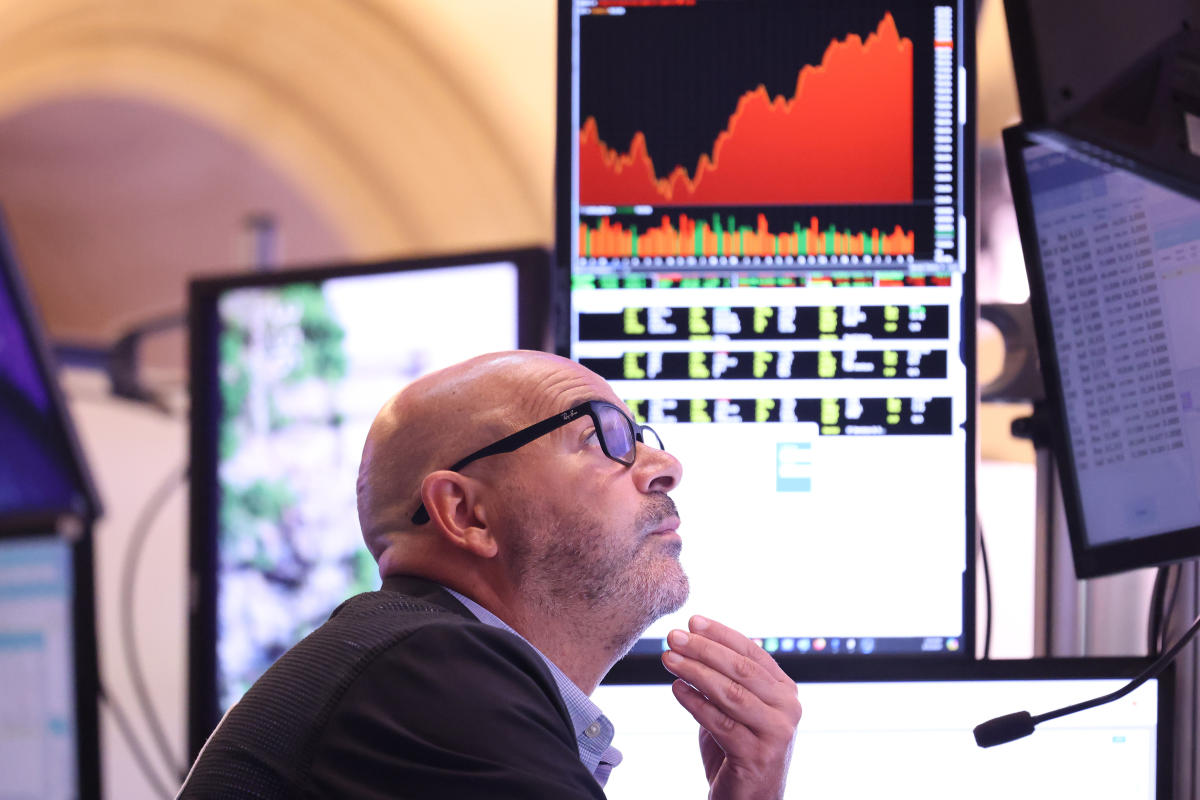
US stocks were lower on Thursday after the latest consumer inflation print came in hotter than anticipated, further blurring the picture of the Federal Reserve’s next interest rate decision in November.
The Dow Jones Industrial Average (^DJI) slipped 0.4%, and the S&P 500 (^GSPC) dropped more than 0.3% after both clinched fresh record highs on Wednesday. The tech-heavy Nasdaq Composite (^IXIC) was off about 0.1%.
Chip heavyweight Nvidia (NVDA) climbed more than 1% as it eyed a rise to a record high, while e-commerce giant Amazon (AMZN) also rose, helping the Nasdaq pare earlier losses.
In focus Thursday was a reading on consumer inflation showing prices rose 0.2% last month, more than the 0.1% rise Wall Street was expecting. On an annualized basis, prices rose 2.4%, compared with 2.3% expected. The data was of greater interest than usual as investors puzzle over the chances of a “no landing” for the economy after last week’s jobs report revived worries about inflation flaring up again.
But the jobs market provided a surprise of its own on Thursday, as initial unemployment claims rose to 258,000, much more than Wall Street anticipated and the highest print since August 2023.
Read more: What the Fed rate cut means for bank accounts, CDs, loans, and credit cards
Amid all the moving parts, traders now see a 18% chance that the Fed will hold rates steady in November, per the CME FedWatch Tool. Just a week ago, the odds of no cut were at 0% as the market heeded policymakers’ message and prepared for a 25 basis point rate reduction.
Also on deck is Tesla’s (TSLA) highly anticipated robotaxi event on Thursday evening. CEO Elon Musk is expected to reveal a two-door, butterfly-wing prototype of the cybercab he has bet the EV maker’s future on.
Live14 updates
-
Jobless claims to remain ‘elevated’ amid hurricanes, strikes
Weekly jobless claims soared to 258,000 in the week ending Oct.5, the largest weekly print since August 2023.
The move higher from the prior week’s reading of 225,000 was the largest week-over-week increase since July 2021. Economists were quick to point out the ongoing strike from Boeing workers as well as several hurricanes that have hit different parts of the US over the past several weeks likely impacted the results.
“Claims rose markedly in some of the states most impacted by Hurricane Helene and the Boeing strike although some unimpacted states saw large increases as well,” Oxford Economics lead US economist Nancy Vanden Houten wrote in a note to clients on Friday. “Claims will likely continue to be elevated in states affected by Helene, Hurricane Milton and the Boeing strike until its resolved.”
Even with some clear distortion from Hurricane Helene, Citi economist Gisela Hoxha wrote in a note to clients that states which weren’t impacted by the hurricane also saw an increase.
“This suggests that the rise in initial claims is not just a temporary weather driven increase but could reflect some genuine economic weakness in other parts of the country,” Hoxha wrote.
On the surface this would likely boost the case for a November interest rate cut from the Federal Reserve which has made it clear it won’t welcome further signs of labor market weakness. But Thursday also brought a hotter-than-expected inflation reading, which furthered the case for the Fed not to cut at all in November.
Combine both pieces of data and the picture is rather mixed. There is perhaps one clear takeaway though, higher claims are likely going to be the norm headed into the Fed’s next meeting. This means market participants will continue to debate whether or not the central bank will be willingly to write off the increase as noise from weather related job displacements or consider it a true sign of labor market deterioration
-
Read More: Dow, S&P 500 waver after hotter-than-expected inflation print