


Commercial activity in the city has dropped by an estimated 80% over the last three days, according to its Chamber of Commerce.
This is just the latest extreme weather event to smash into Greece, whose economy relies heavily on tourism and agriculture and typically welcomes more than 1 million visitors from the United States each year.
Scientists say the human-driven climate crisis is exacerbating the severity and frequency of these wildfires, soaring temperatures and heavy rains that have increasingly blighted the region in recent years.
In early September last year, Storm Daniel barreled into this Mediterranean nation and its islands, killing at least 17 people and destroying swathes of crops, mostly cotton, of which Greece is by far the largest producer in the European Union.
Farmland was flooded in the breadbasket of the Thessaly Plain, to the north of Volos. And the rains also swelled Lake Karla, a nearby body of water that was deliberately reduced in size in the 1960s to increase farmland and combat Malaria.
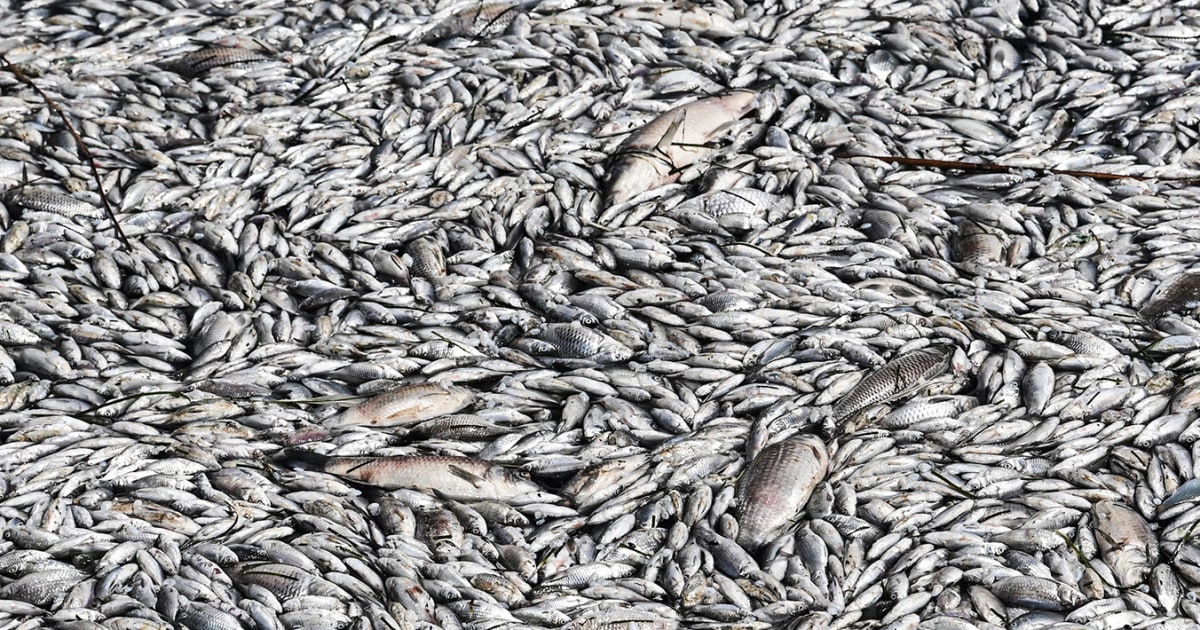
As the lake waters receded back to normal in the year since, freshwater fish have been forced downstream and into the saltwater of the Pagasetic Gulf at Volos, likely killing them in their hundreds of thousands, officials said this week.
The cleanup is well underway, and most fish have now been removed by trawlers dragging nets, or excavators perched into the shore, dumped in the back of trucks.
Read More: Dead fish flood Greece port city Volos, turning off tourists