


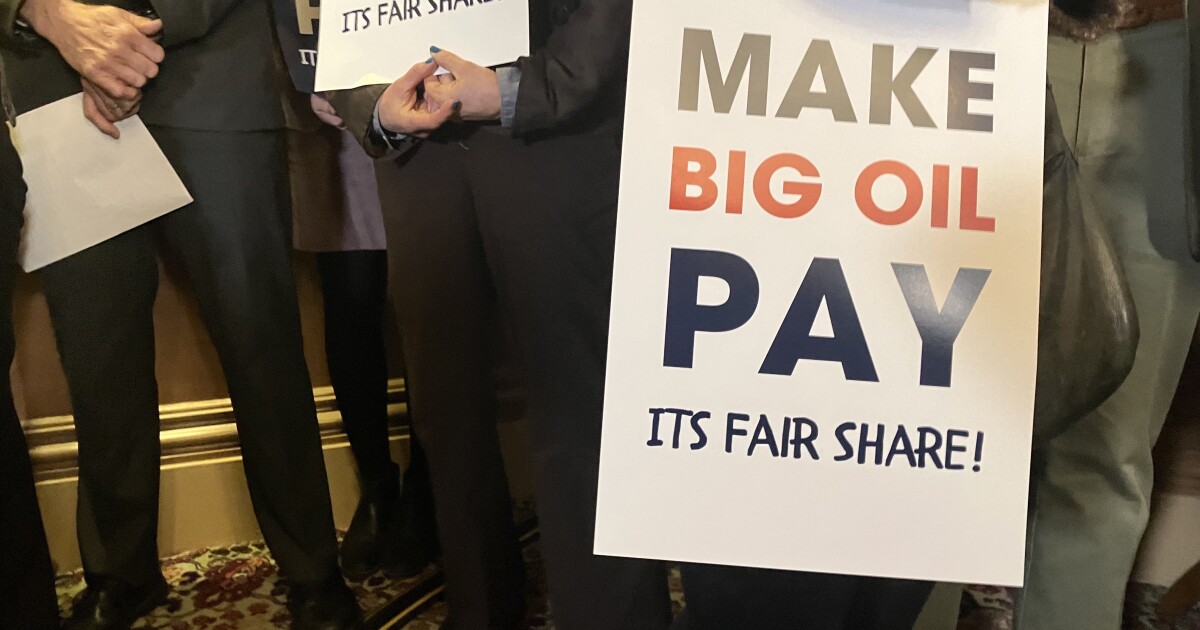
Through the Superfund program, the federal government has for decades collected payment from big companies that create hazardous waste while doing business. It’s a pretty simple concept: The polluter pays.
This legislative session, some Vermont lawmakers and environmental advocates are pushing for the state to create a similar program to pay for climate damages in the Green Mountain State using money from big oil companies.
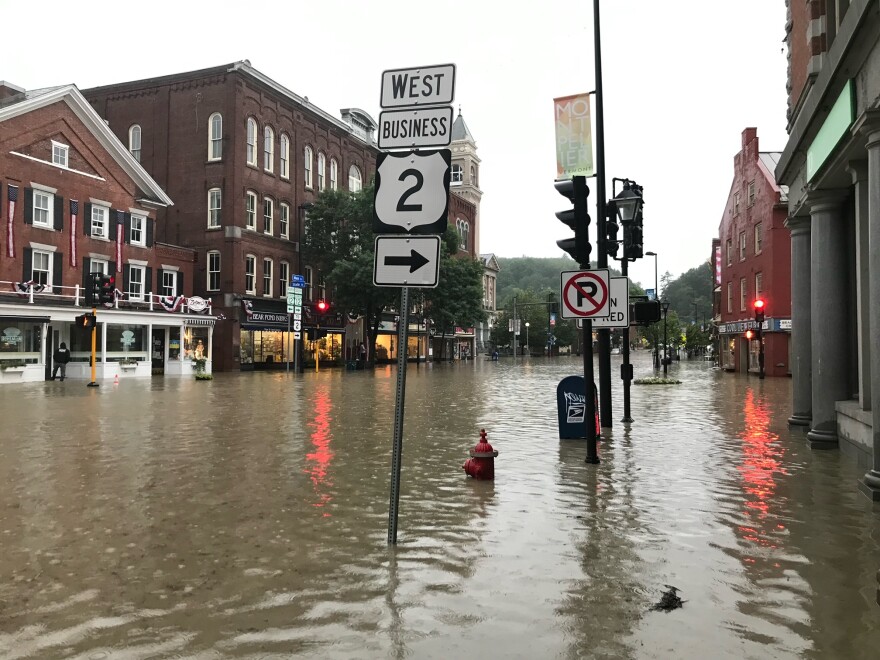
Climate change is bringing more supercharged storms to Vermont, and the costs are piling up. State officials estimate that July’s historic flooding will cost taxpayers north of $1 billion in property damages.
That price tag is just for one storm. A 2021 study from the University of Vermont estimated that climate-change-fueled flooding damages in the Lake Champlain basin alone could top $5 billion by the end of this century.
During a press conference at the Statehouse last week, environmental advocates and Democratic lawmakers from heavily affected districts said their constituents shouldn’t have to foot that bill.
“Let’s be clear. Vulnerable Vermonters, mom and pop businesses in small cities and towns, aren’t the cause of this damage,” said Sen. Anne Watson, a Democrat who represents Montpelier and Barre and is a lead sponsor of the Climate Superfund Act. “Big oil knew decades ago that their products would cause this damage. So it is only right that they pay a share of the cost to clean up this mess.”
Peter Hirschfeld
/
Vermont Public
Under the bill, S.259, Vermont would mimic the U.S. Environmental Protection Agency’s Superfund program, which makes big companies pay to clean up toxic waste they made while doing business. Since its launch in 1980, the program has been used to clean up catastrophic pollution at mines and old abandoned factories across the country.
Vermont’s bill would create a similar program, but for climate damages. Companies that produced more than 1 billion metric tons of carbon dioxide equivalent between 2000 and 2019 would have to pay a share of what climate change has cost Vermont, based on how much that company contributed to global emissions during the same period.
More from Vermont Public: In Johnson, floods brought devastation but also hope and togetherness
“It’s essentially taking that model that’s well established in the hazardous waste context and adapting that to the latest and most pressing environmental crisis we all face, which is climate change,” said Anthony Iarrapino, a lawyer and lobbyist for the environmental advocacy group Conservation Law Foundation.
U.S. Sen. Bernie Sanders has introduced a similar bill at the federal level, though Iarrapino says it’s unlikely to get through Congress. At the state level, climate superfund bills have also been introduced in Maryland, New York and Massachusetts.
“It’s a good idea,” said Patrick Parenteau, Vermont Law School professor emeritus. “But like a lot of good ideas, it’s the execution and the implementation of a law like this that gets complicated.”
Parenteau used to litigate Superfund cases for the EPA’s New England office. He says the stickiest part of the federal Superfund program is actually getting big polluters to pay up and part with their money. Superfund cases tend to be big, complex legal battles that can take years to resolve in the courts.
Vermont Public: The last of Vermont’s abandoned copper mines are finally slated for clean up
Part of the challenge, Parenteau says, will be building an airtight accounting of the damages caused to Vermont by the global burning of fossil fuels and the investments needed to adapt to a warming climate. It’s a task the bill leaves to the state treasurer to complete by 2025.
New York State has already tallied this figure, estimating that adapting to climate change could cost the state more than $150 billion by 2050. The bill’s proponents here say Vermont could borrow from that work, which leans on a field of science called extreme event attribution, which can help determine how much more powerful a storm…
Read More: Climate Superfund Act would make oil companies pay for climate damages in