


This analysis is for information and educational purposes only and is not intended to be read as investment advice. Please click here to read our full disclaimer.
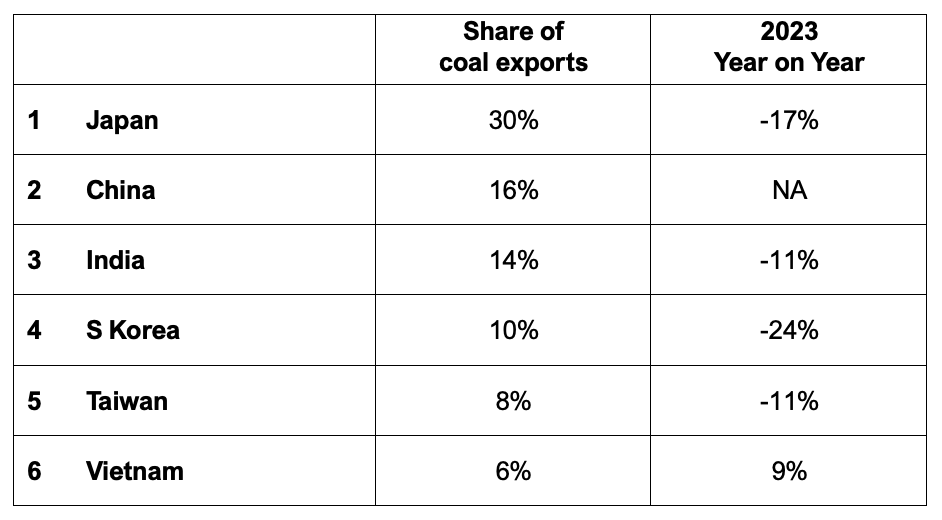
More than 80% of Australian coal exports are shipped to Japan, China, India, South Korea, Taiwan and Vietnam. Australia has built stable trading relationships with these partners, and coal has long supported our trade surplus position.
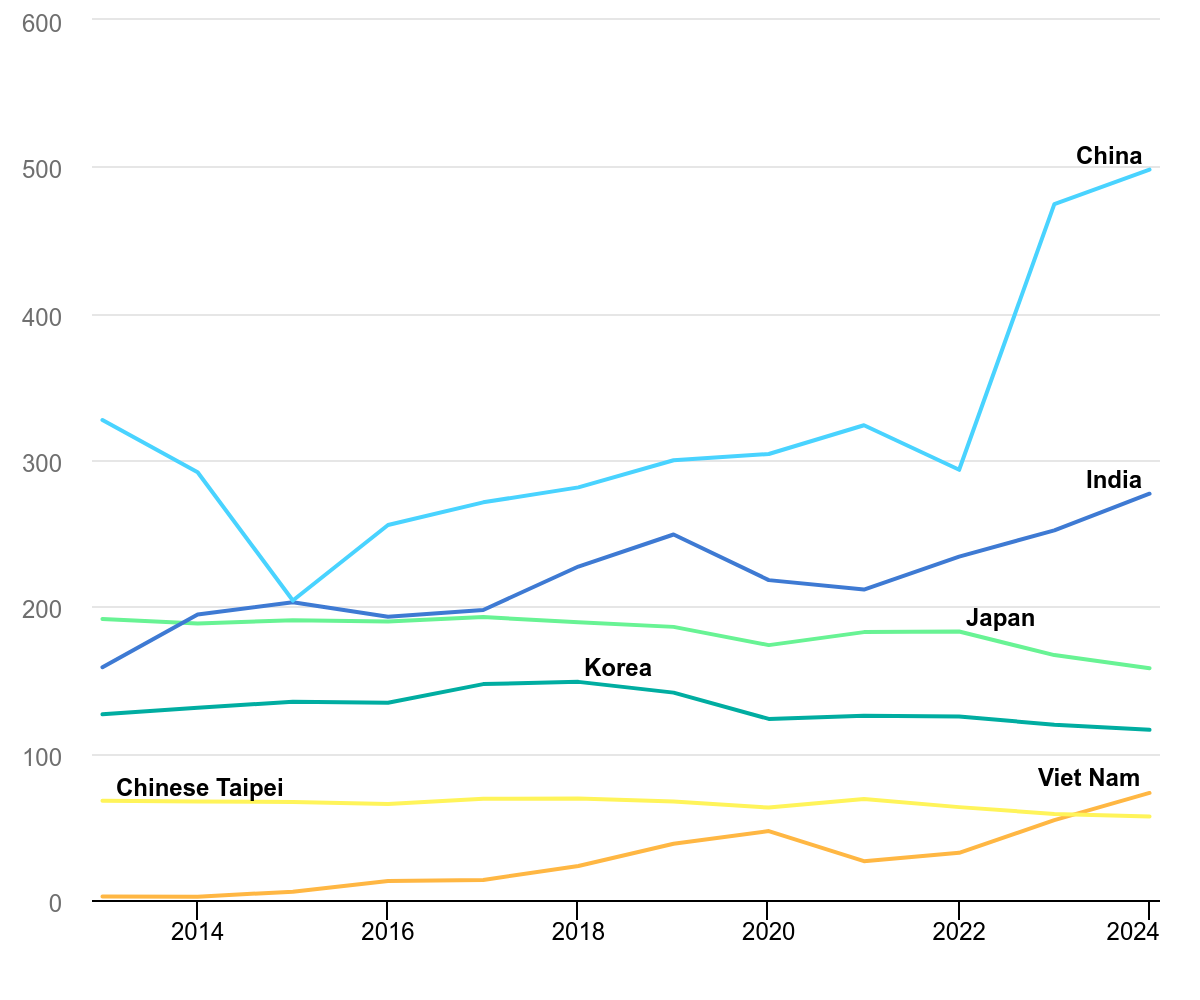
The International Energy Agency’s (IEA’s) mid-year electricity market outlook forecasts that “in 2024 and 2025, the world’s electricity demand is set to grow at the fastest pace since its post-Covid rebound, fuelled by robust economic growth, intense heatwaves and continued electrification worldwide”. The IEA’s mid-year update on coal reported 2023 was a record for global coal consumption. Trade volumes are expected to reach a new high in 2024 (Figure 1) and be broadly flat through 2025. Australia, among others, is expected to benefit from this increased demand.
Figure 1: Coal trade volumes – IEA key countries
Source: IEA
The International Monetary Foundation (IMF) has added weight to this forecast, revising upward GDP growth rates to emerging markets and developing economies, driven by stronger activity in Asia, particularly China and India.
Meanwhile, some of the key Asian markets are reporting reduced trade volumes with Australia, particularly in coal. Monitoring volumes is a more important economic indicator for long-term commodity outlooks than prices because of volatility in commodity prices.
Following record prices for Australian coal in 2022 and 2023, some partners have ramped up decarbonisation plans and/or sought to diversify their coal supply chains in support of more affordable coal.
Table: Top 6 markets for Australian coal exports 2023
Sources: TradeMap export total coal volumes, IEEFA
The trade dynamics are varied in each of our major markets.
1. Japan’s declining coal imports
Historically, Japan has been the largest single market for Australian coal. Before 2008, Japan accounted for over half of our thermal coal exports, rebounding to 49% in the energy crisis of 2022.
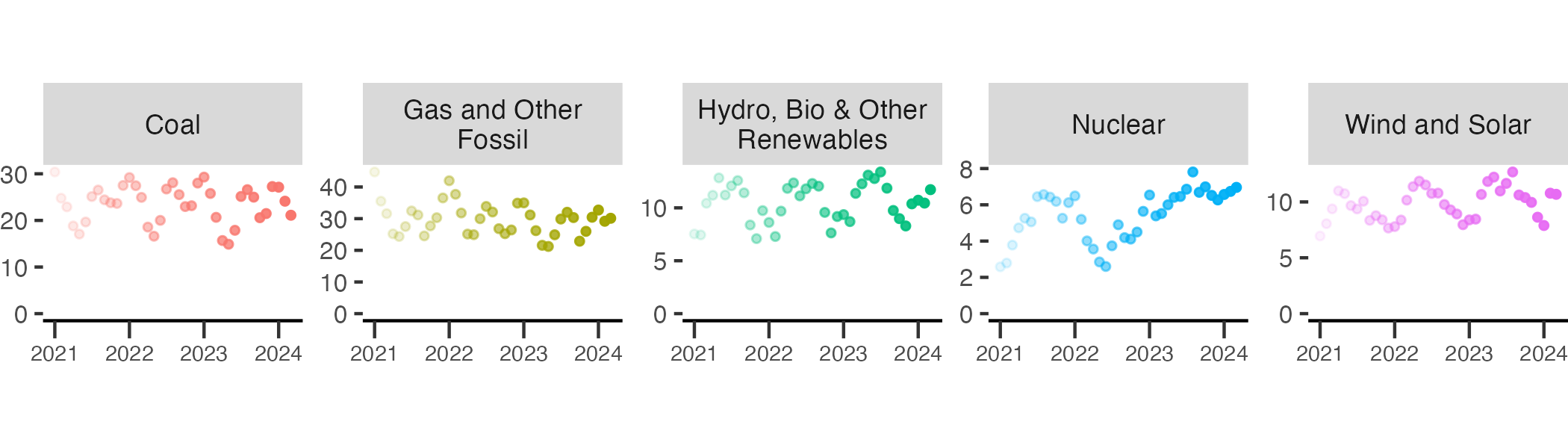
In 2023, Australia’s coal export volumes to Japan fell by 12%. Since China’s coal trade resumed, the Japan market now represents just 30% of our coal exports. Japan’s total coal imports fell in 2023 and a further 6.4% in the first half of 2024.
Figure 2: Japan’s coal use is cyclical and dwindling in favour of clean energy (TWh)
Sources: Ember monthly electricity generation data, IEEFA
2. China embraces renewables
China is our overall largest trading partner and number two in coal trade. Following the resumption of coal trade with China in March 2023, exports to China remain strong. Most of this is thermal coal, with metallurgical (met) coal making up less than 10% of exports to China in 2023.
Australia was traditionally the largest supplier of met coal to China. Since the coal trade ban was lifted in 2023, thermal coal shipments have rebounded but met coal is now being sourced from other countries, primarily Russia and Mongolia (accounting for nearly 80%), with other supplies from Canada and USA.
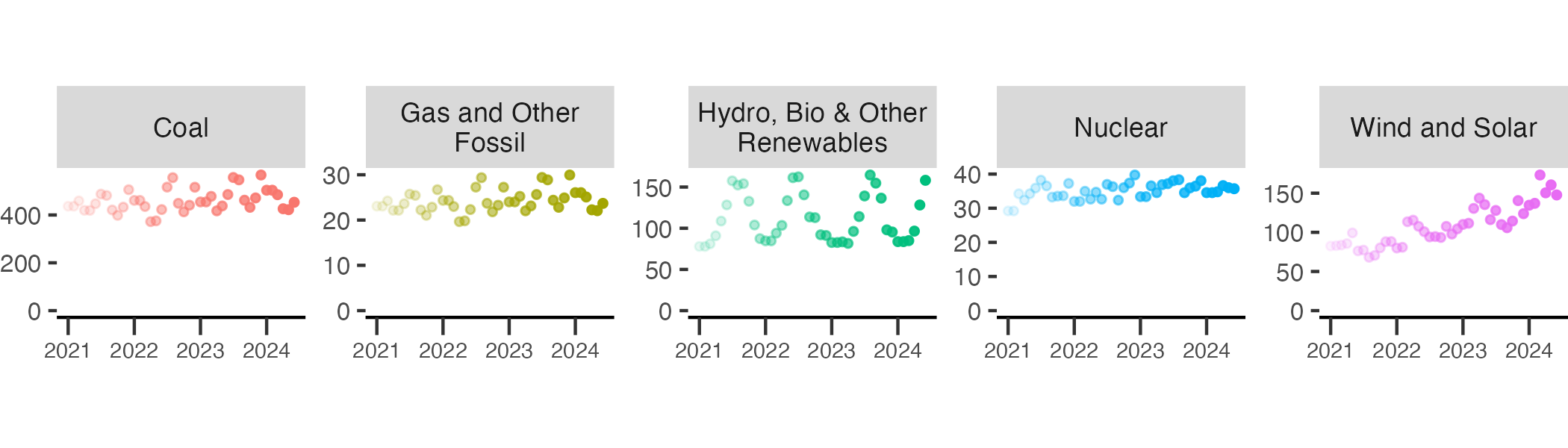
China’s thermal coal appetite is driven by the rapid expansion of its energy infrastructure. In 2023, China reportedly built two-thirds of the world’s new operating coal plants, and two-thirds of large-scale wind and solar plants under construction. In the first five months of 2024, China built 89% of the world’s renewables capacity, including solar, wind and hydro installations.
Figure 3: China’s coal-fired electricity increasing despite growth of renewables (TWh)
Sources: Ember monthly electricity generation data, IEEFA
According to the IEA’s World Energy Investment 2024, China “accounted for 95% of global coal-fired power plants that reached Final Investment Decision (FID) in 2023 … Against a backdrop of rapid expansion of renewable capacity in China, these new unabated fossil fuel power plants face the prospect of very low utilisation and reliance on capacity markets.” Thermal coal use rebounded in 2023 after drought reduced hydropower production.
There is no doubt that coal’s share of the power mix may be falling, but coal use in absolute terms continues to grow, with coal imports rising by 12.5% in the first half of 2024.
3. India a growth powerhouse
India consumed about 1.2 billion tonnes of coal in the 2023-24 financial year, with domestic coal accounting for about 1 billion tonnes of this. India’s prolonged heatwave this year, combined with strong economic growth, has increased electricity demand. The Ministry of Coal plans to boost local production to meet an expected demand of 1.5 billion tonnes by FY2029-30.
Figure 4: India’s coal use in electricity…
Read More: Australia’s coal export market: Shifting trade dynamics with Asia