


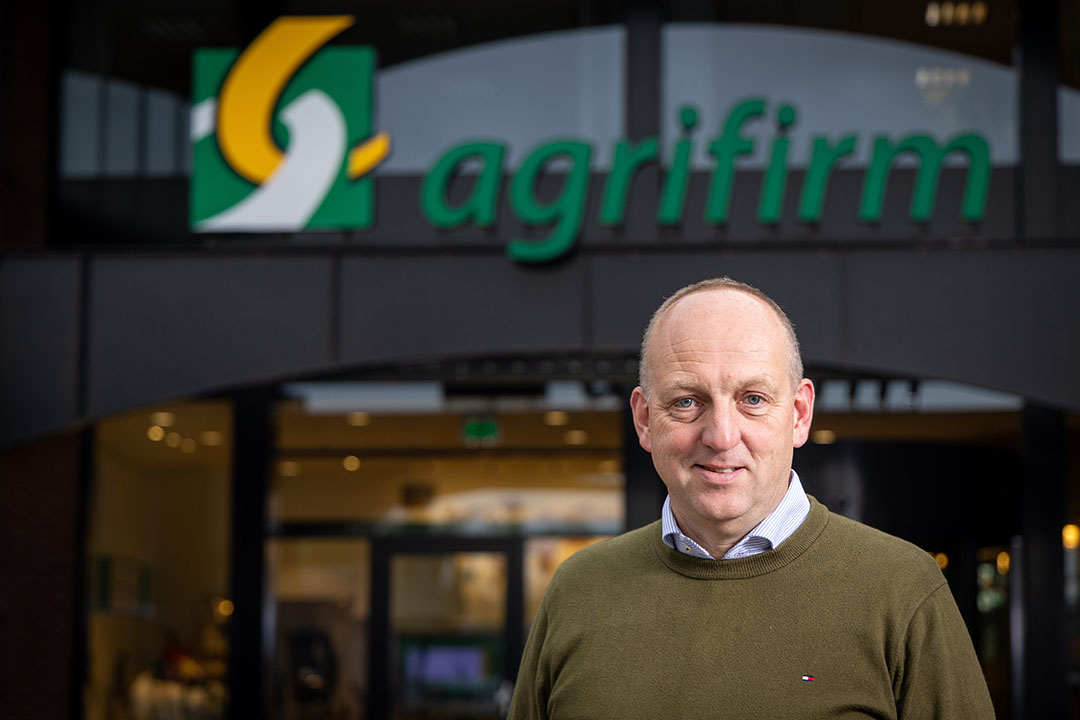
Once the burning Russian wheat fields were on TV, speculation increased market volatility more than ever.
Fluctuating prices for raw materials are not a thing of the past. Cornel Boere has been in the raw material business for 30 years. When he started at Cehave Landbouwbelang at the end of 2007 with 15 years’ experience under his belt, he became responsible for purchasing all the company’s raw materials. He almost immediately faced an upcoming crisis. The market was already uneasy due to the credit crisis, and this was further exacerbated by extreme drought in the grain areas. “Once the burning Russian wheat fields were on TV, speculation increased market volatility more than ever.”
What influence did this market volatility have?
“The extreme price movements caused suppliers to go bankrupt. Raw materials that were on the books were not delivered. If you must explain to farmers why feed prices are suddenly skyrocketing or why feed cannot be supplied, you are in trouble. That is what makes volatile markets so dangerous, and why we choose partners who can take a few blows.”
Agrifirm sells more than 4 million tons of feed and premixes. How do you purchase such large volumes?
“We have a broad horizon. We always look 1 to 2 years ahead at how markets will develop. The sales department provides us with expectations of how much of which feeds they will sell and in which market. From this, we can deduce what we need in terms of grains, proteins, amino acids, and vitamins. The mutual price ratios determine whether the use is corn, wheat, soy, turnip, syrup, citrus or any other raw material.”
The first thing you mention is ‘how markets will develop’.
“To be more exact: what are the harvest expectations? These are very decisive. We have continuous insight into the expected usage, areas, yields and price ratios. With a very experienced group of buyers, almost 30 people, we have a wealth of knowledge.”
With a 2-year window into the future you are talking about prices for grain that has yet to be sown
“It is not directly about the price, but about the supply. High prices lead to high production and therefore lower prices. This applies to grains, less so to protein crops. If a few percent more or less grain becomes available, we want to know about it. So not only: what does it look like now, but above all, what will happen in the next year and perhaps even the year after that? This is how we determine our purchasing strategy. With premixes, we must do business in countries that are sensitive to economic fluctuations, political unrest, uprisings, or war. Then things can suddenly turn out very differently than expected.”
The price is not formed by taking the last cent out of the price negotiations.
Does a 2-year window also mean committing to delivery within that period?
“Not immediately; that depends on the price. We are not a trading firm, but we purchase raw materials for our own use. This gives us a different relationship with our suppliers because they know that if Agrifirm buys, we also purchase. We buy portions every time, most people in this business do. With our size, suppliers sometimes do not even want to sell to us at once, because they also take a risk. If we were to buy 200,000 tons of wheat at once, the supplier would have to purchase it from farmers or have it in their barns.”
Surely the big suppliers of this world can handle that?
“Yes, but they do not have much in stock either. They purchase the raw materials and hedge this with financial instruments. However, the spreads and price differences between futures markets such as Matif and CBOT with the effective delivery are increasing. This in turn increases the risks because we are not that supplier’s only customer. Then, the risks just keep adding up.”
Isn’t that a prelude to consolidation?
“Yes, and that is also in full swing. Around 2005, there were still many local traders, grain collectors and…
Read More: Agrifirm’s purchasing head talks about volatility in commodity markets