


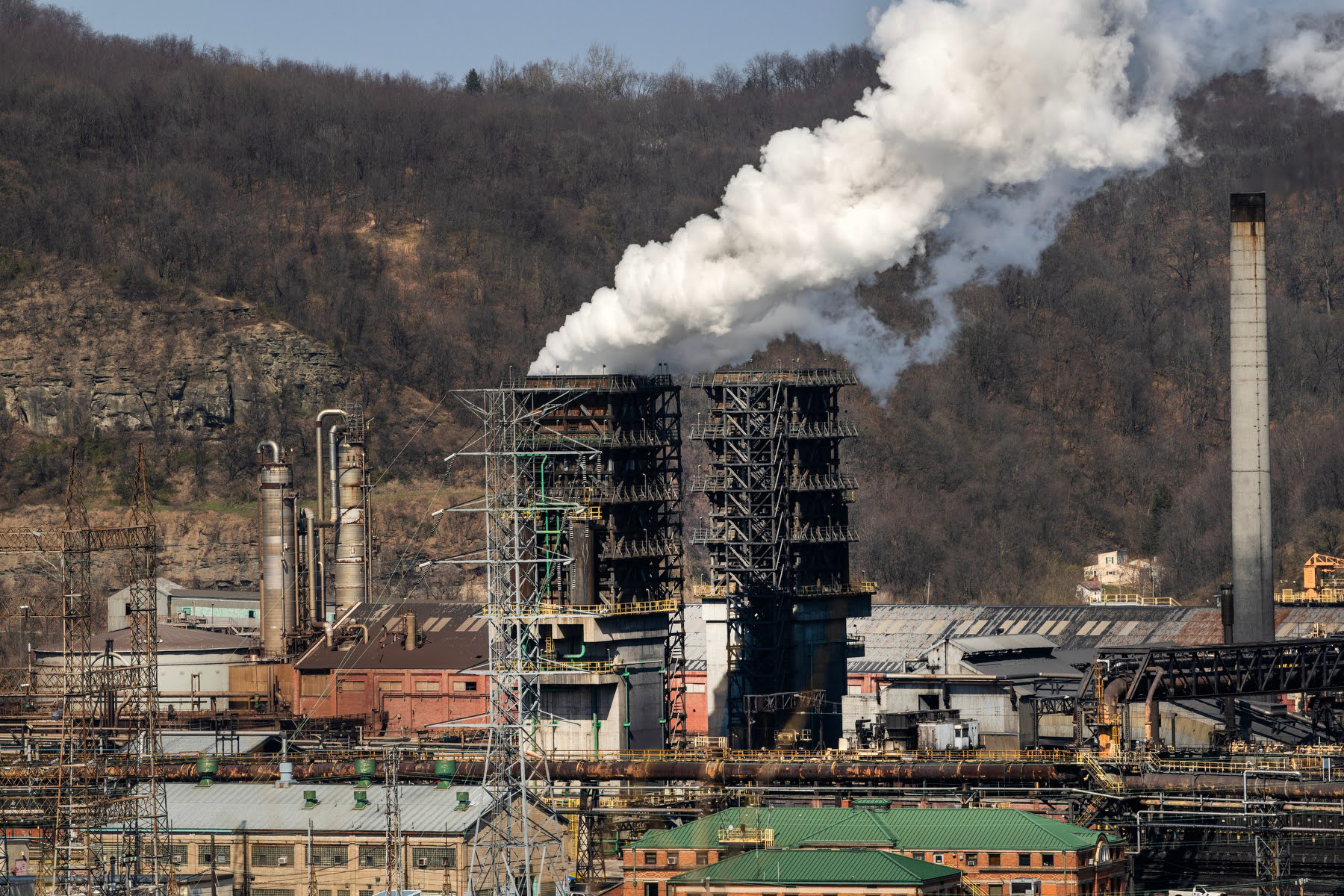
Last year, researchers at New York University published a startling conclusion: The 2016 closure of the Shenango Coke Works, a coal-powered manufacturing facility outside Pittsburgh, was linked to “near-instant decreases in local heart-related emergency department visits and hospitalizations for cardiovascular diseases” in the surrounding area. Coke is a derivative of coal that is used in steelmaking, and the study provided persuasive evidence of the dangers for nearby residents.
A new report aims to quantify the costs and damage to public health that steelmaking that still relies on coal causes—not just in one Pennsylvania neighborhood, but across the country.
The report found that cancer rates related to air pollution are 12 percent higher near these steel plants than national rates and 26 percent higher for residents living near coke plants. Researchers used modeling to link increased cases of asthma symptoms to the toxic byproducts, like sulfur dioxide and lead, emitted from coal-based steelmaking plants.

Explore the latest news about what’s at stake for the climate during this election season.
Based on data from the U.S. Environmental Protection Agency’s National Emissions Inventory, the report concluded that this sector of the steel industry caused between $6.9 billion and $13.2 billion in health impacts such as premature deaths and emergency room visits, along with an estimated $137 million in economic losses every year from missed work days and other ripple effects. In the United States and abroad, coal-based steelmaking is also a significant contributor to climate change, pumping out 11 percent of the world’s greenhouse gas emissions.
Although coal was once the dominant source of fuel for America’s steel industry, today there are only seven coal-based steel plants and 10 coke plants in the United States. The facilities are dotted across the Midwest and Appalachia; the country’s largest coke plant, the 123-year-old Clairton Coke Works, is in Pennsylvania. The majority of steel made in America today is manufactured in electric arc furnaces from recycled scrap steel, a less-polluting process than the older methods to make new steel.
Kevin Dempsey, president and CEO of the American Steel and Iron Institute, a trade group for the steel industry, said in a statement that American steel companies are “dedicated environmental stewards with a strong commitment to the communities in which they operate.”
“Our industry is recognized as among the lowest carbon- and other emissions-intensive steel industries in the world,” he said.
Hilary Lewis, the steel director at Industrious Labs, a nonprofit that focuses on decarbonizing heavy industry and that produced the report, said she was surprised by the big impact of such a small number of facilities. “There aren’t actually that many left,” she said.
That shrinking footprint is part of the challenge of raising awareness about the outsized effects of just 17 plants. Even in former steel towns, where the old mills have closed, people don’t know that steel is still being made in the United States with coal. “There has not been a huge innovation in how we make steel, and it’s still a coal-based process with big smokestacks and coke and high temperatures,” Lewis said. “The working conditions are much less dangerous than they used to be, but the basic technology has stayed the same.”
Lewis said Industrious Labs wanted to make this data available to community members who live near the plants but may not have access to specifics and metrics about the pollution in their neighborhoods. “Having access to this data was really important to them and not something they had in the past,” she said. “They lived in Gary, Indiana, or East Chicago, right next to these facilities their whole lives, and they didn’t know that there was lead coming out of these smokestacks.”
“A lot of times people are led to believe that it’s genetics, and that’s a narrative that must change.”
— Germaine Patterson, a community health worker
For Germaine Patterson, a community health worker in Clairton, Pennsylvania, who was interviewed for the report and who has seen firsthand the health impacts that come from living next to a coke plant, the data was more evidence of a problem she and others in Clairton are well aware of. “It’s not anything that I haven’t heard before, that’s for sure,” she said.
Even so, the projected statistics for asthma (250,504 cases of symptoms per year) and premature deaths (between 460 and 892 annually) connected to air pollution from coal-based steelmaking surprised her.
“A lot of times people are led to believe that it’s genetics, and…
Read More: Adding up the Public Health Costs of Using Coal to Make Steel