


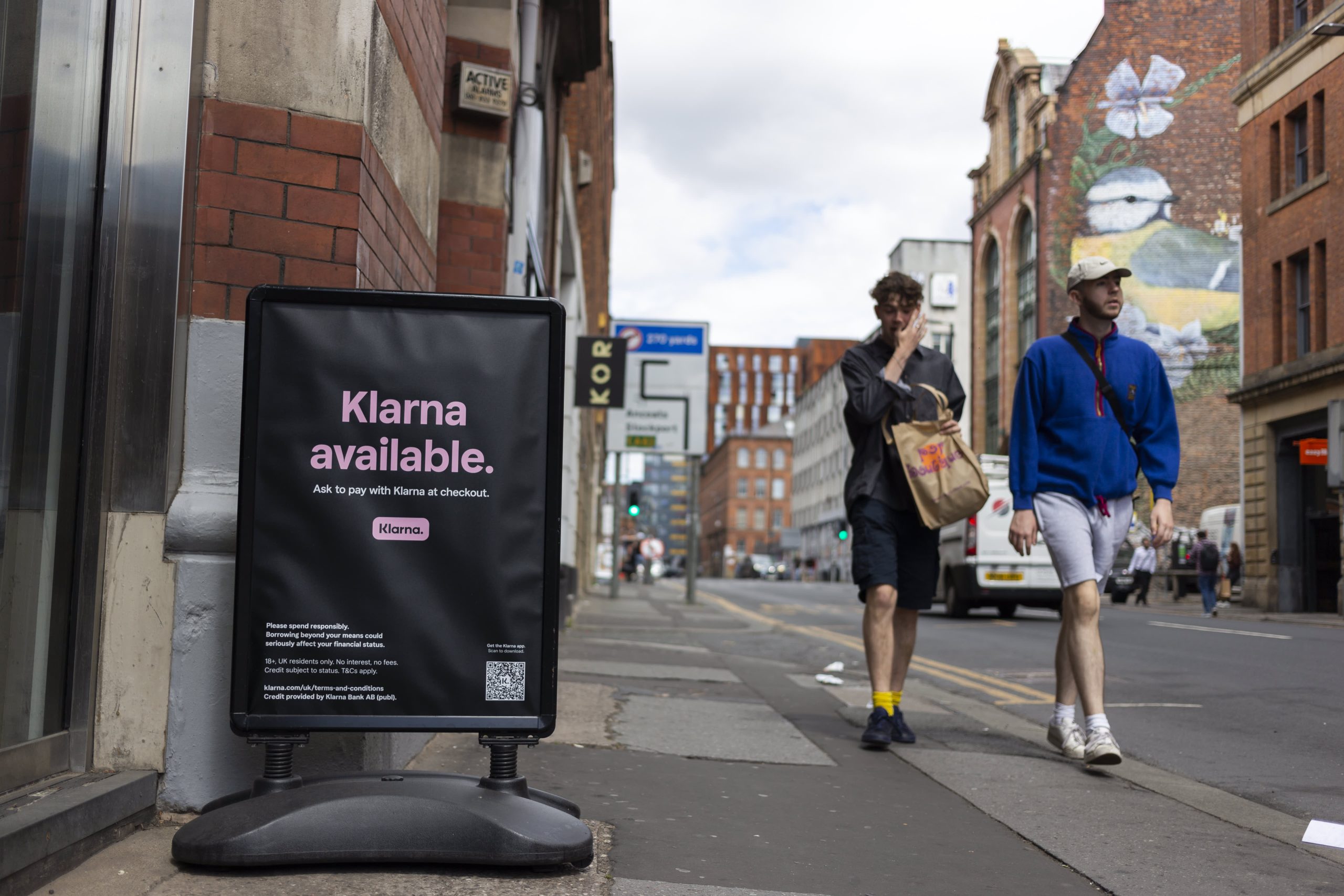
But now that January has arrived and the other installments are starting, Andersen isn’t sure how she’s going to pay them off. She has found herself buried under a mountain of micro payments, wondering how she’s going to cover her bills.
“I’ve definitely been selling clothes … if I have to go sell a pair of shoes to make a payment, I will,” Andersen told CNBC of the roughly $1,700 she racked up in buy now, pay later debt. “I’m definitely worried about [the payments]. It’s definitely a concern and I’m definitely going to have to find a way to come up with the money.”
Andersen is one of many Americans who turned to buy now, pay later to fund their holiday shopping last year to avoid credit card debt but are now having trouble paying off those bills.
In an era where persistent inflation and record-high interest rates are shaping financial decisions for many shoppers, the service helped fuel a boom in overall online spending that topped out at $222 billion from Nov. 1 through the end of December. During the season, buy now, pay later usage hit an all-time high, rising a staggering 14% from the prior year and contributing $16.6 billion to online spending.
On Cyber Monday alone, buy now, pay later use spiked nearly 43%, Adobe said.
“Sales, especially online sales, were probably juiced to some extent because of buy now, pay later usage,” said Ted Rossman, senior analyst at Bankrate. “A lot of people are drawn to this financing method as an alternative to something like a credit card where the average interest rate is a record high 20.74%. I would caution that you can still get into trouble with buy now, pay later … it can still encourage you to overspend and kind of trick yourself.”
The surge in use of buy now, pay later comes as credit card debt hits a record high and delinquency rates have nearly doubled over the past two years. While delinquencies were at historic lows during the Covid-19 pandemic, the rate of people who’ve gone more than 30 days without paying their credit card bill recently topped pre-pandemic levels, according to the Federal Reserve.
It’s tough to say how buy now, pay later fits into the country’s overall debt picture. Providers that offer the service don’t typically disclose how often those bills go unpaid, and the debts aren’t reported to credit bureaus. Klarna, PayPal and Affirm all declined to share buy now, pay later delinquency rates with CNBC.
Affirm has said the short-term and high-velocity nature of its buy now, pay later service makes traditional credit metrics less relevant. It writes off those unpaid loans within 120 days, which is why it doesn’t disclose delinquency rates for the service. It does disclose other credit metrics for its longer-term loans.
Klarna and Affirm previously told CNBC their underwriting strategies ensure that only people who can pay back the short-term loans can access the service because their business models wouldn’t work if people frequently missed payments. While Klarna charges late fees that top out at 25% of the purchase price, according to a review of its terms and conditions, Affirm does not.
Klarna said its global default rate for its overall business including buy now, pay later is less than 1%. In the U.S., 35% of consumers pay the company back early, it said.
The opacity surrounding the novel service has created a so-called phantom debt phenomenon that has left economists, regulators and even shoppers concerned about the effect it could have on the economy.
“It’s just this nebulous cloud of debt. Nobody really knows how it works and it’s just floating around us all the time and it definitely feels like a pending housing crisis, almost like 2008 but for shopping,” Andersen joked. “That’s the myth that Klarna and PayPal sell you on, is that you can have this lifestyle, you can have these things, but the truth is, you can’t.”
Alaina Fingal, a New Orleans-based financial coach and the founder of The Organized Money, typically receives five or six emails at the beginning of January from people who overspent during the holidays and need help managing their finances.
This year, it was closer to 20 or 25.
“Most people used all of their cash, they ran out of cash, then they would put it on a credit card and then if they maxed out credit cards, then they would go to other services like buy now, pay later,” Fingal told CNBC.
Fingal said she spoke with one client who had two maxed-out credit cards and used two buy now, pay later services, leaving her struggling to make payments.
“Since she couldn’t afford it in the first place, those minimum payments are causing her to struggle a lot to cover food and her regular bills for this month,” said Fingal. “So it just creates this cycle that becomes harder and harder to come out of.”
While it’s unclear how…
Read More: Shoppers deal with holiday debt