


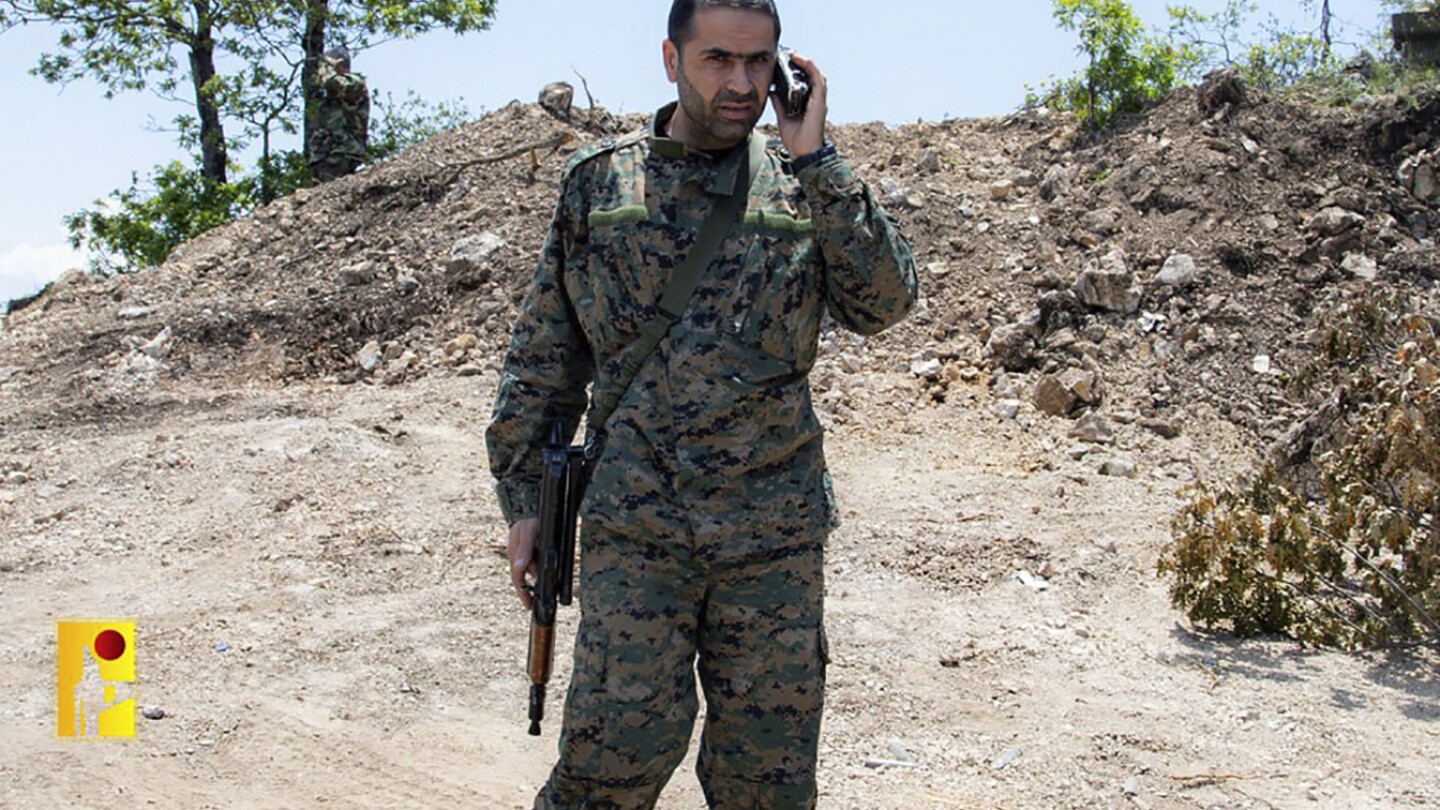
BEIRUT (AP) — An Israeli airstrike killed an elite Hezbollah commander Monday in southern Lebanon, the latest in an escalating exchange of strikes across the border that have raised fears of another Mideast war even as the fighting in Gaza exacts a mounting toll on civilians.
The strike on an SUV killed a commander in a secretive Hezbollah unit that operates along the border, according to a Lebanese security official who spoke on condition of anonymity in keeping with regulations. The commander, Wissam al-Tawil, was a veteran of the Iranian-backed Lebanese force who took part in the 2006 cross-border kidnapping of two Israeli soldiers that triggered the last war between Israel and Hezbollah, an official in the group said.
He is the most senior Hezbollah militant killed since Hamas’ Oct. 7 attack into southern Israel triggered all-out war in Gaza and lower-intensity fighting between Israel and Hezbollah, which has escalated since an Israeli strike killed a senior Hamas leader last week in Beirut.
U.S. Secretary of State Antony Blinken, who is back in the region this week, appears to be trying to head off a wider conflict.
In other developments, Israel said it has largely wrapped up major operations in northern Gaza, though fighting and bombardment there continue. Israeli forces are now focusing on the central region and the southern city of Khan Younis, where thousands more Palestinians fled.
Israeli officials say the fighting will continue for many more months as the army seeks to dismantle Hamas and return scores of hostages taken during the militants’ Oct. 7 attack.
The offensive has already killed over 23,000 Palestinians, devastated vast swaths of the Gaza Strip, displaced nearly 85% of its population of 2.3 million and left a quarter of its residents facing starvation.
‘SICKENING SCENES’ IN GAZA’S OVERWHELMED HOSPITALS
Medics, patients and displaced people fled from central Gaza’s main hospital as fighting drew closer, witnesses said Monday. Losing the facility would be another major blow to a health system shattered by three months of war.
Doctors Without Borders and other aid groups withdrew from Al-Aqsa Martyrs Hospital in Deir al-Balah, saying it was too dangerous amid Israeli bombardment, drone strikes and sniper fire. That spread panic among people sheltering there. Thousands left, joining the hundreds of thousands who have fled further south, said a hospital staffer, Omar al-Darawi.
Tens of thousands of people have sought shelter in Gaza’s hospitals, which are struggling to treat the continuous flow of wounded from Israeli strikes. Only 13 of Gaza’s 36 hospitals are even partially functional, according to the U.N. humanitarian office.
The Al-Aqsa hospital was struck multiple times in recent days, al-Darawi said. After the pullout, large numbers of patients who cannot be moved were concentrated on one floor to be treated by remaining doctors. “They need special care, which is unavailable,” he said.
World Health Organization staff who visited Sunday saw “sickening scenes of people of all ages being treated on blood-streaked floors and in chaotic corridors,” WHO chief Tedros Adhanom Ghebreyesus said. “The bloodbath in Gaza must end.”
More dead and wounded arrive at the hospital each day as Israeli forces advance in central Gaza, backed by heavy airstrikes. The military said Monday it had uncovered a large Hamas site for building rockets in the nearby Bureij refugee camp.
Thousands have been fleeing the area, heading south. Fifteen members of the Ayash family crammed into a van with their belongings for the journey. “Along the way there was banging, missiles, bombing, and planes,” said Khawla Ayash.
Reaching Muwasi, a coastal area outside Rafah, they unloaded bags, blankets and thin mattresses and began setting up tents alongside other relatives.
The U.N. children’s agency UNICEF warned that 90% of Gaza’s children under 2 were consuming only bread and milk.
“As the threat of famine intensifies,” hundreds of thousands of children face severe malnourished, with some at risk of death, said Catherine Russell, UNICEF’s executive director. “We cannot allow that to happen.”
DIRE CONDITIONS IN THE NORTH
The situation is even more dire in northern Gaza, which Israeli forces cut off from the rest of the territory in late October.
Entire neighborhoods have been demolished, and most of the population has fled. Tens of thousands who remain face shortages of food and water. The WHO said Sunday it has been unable to deliver supplies to northern Gaza for 12 days because of bombardment and the inability to guarantee safe passage with the Israeli military.
Israel still battles what it describes as pockets of…
Read More: Israeli strike kills an elite Hezbollah commander. Follow the latest updates