

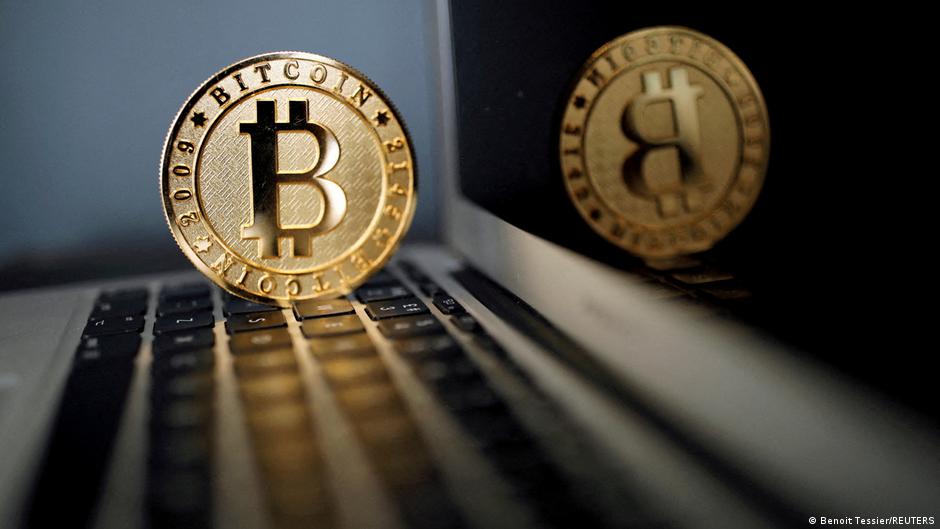
Malaysia’s national utility firm Tenaga Nasional incurred losses of more than $1 billion (€860 million) from illegal power usage by cryptocurrency miners between 2020 and August this year, the country’s Energy Ministry said earlier this month.
Malaysian police have stepped up a crackdown, conducting several raids on suspected sites since January, as part of a multi-agency operation with energy regulators and anti-graft authorities to tackle electricity theft linked to crypto mining.
Tenaga Nasional said in a report to parliament this month that it had detected 13,827 establishments suspected of being illegal crypto mining sites.
“These activities not only threaten user safety, but also jeopardize the nation’s economic stability, increase public safety risks … and pose a serious threat to the national energy supply system,” the public utility said in a statement.
China was once the world’s largest site for crypto mining, an energy-intensive process that uses powerful computers to solve complex mathematical puzzles to validate cryptocurrency transactions and earn new digital coins as a reward.
But when China’s government banned the practice in 2021, citing threats to the country’s financial stability and energy conservation, several Southeast Asian countries moved quickly to welcome miners fleeing the crackdown, hoping to monetize cheap electricity and attract new investment.
Most notable was Laos, an energy-rich landlocked state, which in 2021 launched a public-private pilot program allowing a handful of firms to mine and trade cryptocurrencies using surplus hydropower.
Gathering storm
The mood around crypto mining has grown darker in recent months as China and also the United States have increasingly targeted Southeast Asia’s vast cyber scam industry, which is allegedly closely tied to cryptocurrency exchanges and miners.
At the same time, Southeast Asian governments have found that the promised windfall from hosting miners has largely failed to materialize, while the costs to stressed power grids and climate targets are mounting.
Last month, the Laos government announced that it would discontinue its crypto mining program and likely halt electricity supply to miners by the first quarter of 2026, following poor results.
This was attributed to a lack of broader economic spillovers — such as jobs and local supply chains — as well as crypto miners consuming too much energy during the dry season, when hydropower output falls.
“Crypto doesn’t create value compared to supplying it to industrial or commercial consumers,” Deputy Energy Minister Chanthaboun Soukaloun told Reuters last month.
In March, Thailand’s Central Investigation Bureau seized dozens of illegal crypto mining machines, which had been hidden in abandoned houses near the capital Bangkok. Authorities estimated they had cost the state utility around $327,000 in stolen electricity.
Last week, Malaysia’s Energy Transition and Water Transformation Ministry said it had established a multi-agency committee to address the growing problem of electricity theft linked to crypto mining.
Economic and energy costs multiply
“Illegal activities, crypto mining or not, should be cracked down on, of course,” Qiang Tang, an associate professor at the University of Sydney’s School of Computer Science in Australia, told DW.
However, he added that the problem was illegal power use or theft, not crypto mining itself, which is not illegal in most Southeast Asian countries. “I think the attention should be more on the real issue, like how to improve power supply chain security in those countries,” he said.
Saaidal Razalli Azzuhri, a telecoms expert at the University of Malaya, believed that the $1 billion loss figure was likely the lower bound of the electricity crypto miners have stolen in Malaysia.
“That number only covers premises that were actually found and inspected, and does not include undetected sites or long-term damage to transformers and cables,” he told DW.
Because many cryptocurrencies, especially bitcoin, have a hard-coded limit on supply, their networks must undergo “halving” events, when new coin issuance is cut sharply, squeezing profits for crypto miners.
The last “halving” occurred in April 2024. After such an event, “mining only makes sense if your power is extremely cheap or stolen,” said Azzuhri.
This may explain why some experts reckon that the incentive to steal electricity for mining has increased since last year.

Subscribe
Login
0 Comments
Oldest