


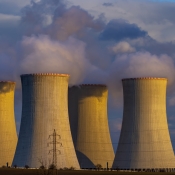
Summary
South Korea’s proposed power plan raises more questions than it answers. The renewables sector is not getting the grid support it requires. The plan is strong on nuclear, weak on phasing out coal, and includes speculative technologies, while the possibility of domestic gas production throws another major uncertainty into the mix.
by: Ross McCrackenIn its 11th Basic Plan for Electricity Supply and Demand, Seoul confirmed its return to nuclear expansion, putting in place a near complete reversal of the previous administration’s policies.
Under former president Moon Jae-in, no life extensions for existing reactors were allowed and all new build plans, bar the completion of the Saeul 3 and 4 reactors (formerly Shin Kori 5 and 6), were cancelled. Nuclear power was to be phased out. Under President Yoon Suk Yeol, who assumed office in May 2022, life extensions will be granted and new building plans have resumed.
The re-commitment to nuclear power has obvious implications for the use of LNG, and for the trajectory of South Korea’s energy transition. The country is the third largest market for LNG after China and Japan, importing 60.6bn m3 of the fuel last year, equivalent to 11% of the global market.
Policy inconsistency
Given long construction times for reactors an…
Read More: implications for LNG in South Korea [Global Gas Perspectives]