


Study setting and data sources
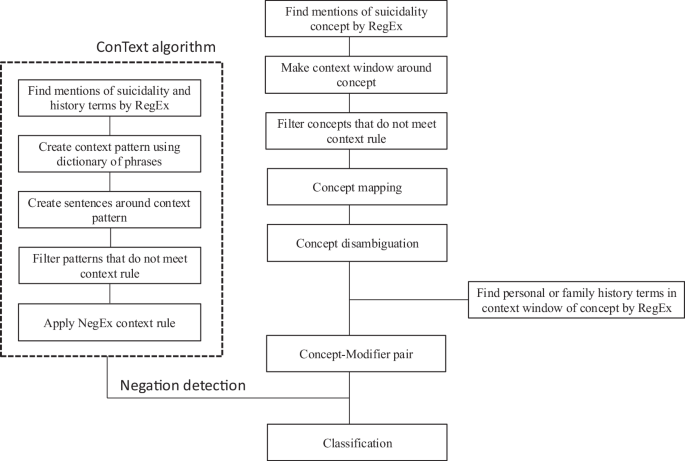
The rule-based NLP and DL tools were developed and validated at three academic medical centers: Weill Cornell Medicine (WCM), Northwestern Medicine (NM), and the University of Florida Health (UF) to enhance the generalizability and portability of our tool. This multi-site study was conducted with the approval of The Weill Cornell Medicine Institutional Review Board (Protocol No. 22-05024878), The Northwestern University Institutional Review Board (Protocol No. STU00218389), and The University of Florida Institutional Review Board (Protocol No. IRB202001100), ensuring adherence to ethical standards and patient privacy regulations. Informed consent was waived as it is not practicable to obtain consent from large numbers of patients for a retrospective cohort study. In order to enhance the generalizability of the NLP and DL tools, we assembled clinical notes from diverse patient cohorts seeking care from outpatient ambulatory services, emergency department (ED), inpatient care from multiple specialties. For PSH, we implemented a rule-based NLP method and two DL methods using the Bio_ClinicalBERT and GatorTron Transformer models. Similarly, for FSH we implemented a rule-based NLP method and two DL methods using the Bio_ClinicalBERT and GatorTron Transformer models. In the gold standard corpora from each site, we gathered demographic data and recorded diagnoses of SI and SB for the respective patients.
The training data for this study was sourced from WCM, an academic medical center in New York City affiliated with NewYork-Presbyterian Hospital. The dataset comprised of more than 13.8 million clinical encounter notes derived from patients (N = 177,993) who were either prescribed antidepressants or diagnosed with mental health conditions between 2000-2020. Clinical notes consisted of progress notes (49.4%), telephone encounters (32.3%), patient instructions (2.1%), letters (2.0%), nursing notes (0.4%), and unknown types (13.8%). The notes, authored by clinicians from various specialties including internal medicine, psychiatry, anesthesiology, and pain medicine, offer a rich, unstructured collection of information, reflecting the diversity of clinical environments and the variability levels of detail provided. When queried the 13.8 million notes with a filter of having a character string “suicide”, it resulted 194,204 notes, from which we randomly selected 1,301 notes. Of the 1,301 notes, 1000 notes were used for the development of the rule-based NLP method. The remaining 301 notes were used for the development of gold standard for evaluating the NLP method. The same gold standard was used for the training and testing of the DL tools.
NM is a comprehensive academic medical center located in Chicago, IL. The NM Enterprise Data Warehouse is an integrated data platform that provides secure, centralized access to clinical and ancillary data sources from all inpatient and outpatient settings. It consolidates data from Northwestern Memorial HealthCare, the Feinberg School of Medicine at Northwestern University, and Northwestern Medicine Regional Medical Group. The 400 notes used for the validation study were randomly collected from the integrated system between January-December, 2018. The gold standard corpus consisted of 3 (1%) assessment & plan notes, 23 (7.3%) consult notes, 4 (1.3%) discharge/summary notes, 21 (6.7%) ED notes, 26 (8.3%) History & Physical notes, 12 (3.8%) plan of care notes, 167 (53.4%) progress notes, 63 (20.1%) psychiatric note, 3 (1%) telephone encounters, and 16 (5.1%) notes of other types. The clinical notes used for validation were written by 66 (21.1%) psychiatric specialists and 247 (78.9%) non-psychiatric specialists.
The UF Health Institutional Data Repository (IDR) is a clinical data warehouse that aggregates data from the university’s various clinical and administrative information systems, including the Epic (Epic Systems Corporation) system. At UF, the corpus was developed using a random sample of 400 clinical notes derived from a cohort of individuals with at least one prescription of opioids between 2016 and 2019 recorded in the IDR. Patients with pain conditions or those prescribed opioids are at an increased risk of STBs. Adult patients aged ≥18 who had at least one outpatient visit and at least one eligible opioid prescribing order (excluding injectable and buprenorphine approved for opioid use disorder) were included in the patient sample. The gold standard corpus consisted of 13 (3.3%) consult notes, 6 (1.5%) discharge summary, 11 (2.8%) ED notes, 10 (2.5%) H&P notes, 319 (79.8%) progress notes, 8 (2.1%) psychiatric inpatient notes, and 33 (8.4%) other or unknown types.
Evaluation of the NLP and DL tools
The performance of the rule-based NLP…
Read More: Deep learning for identifying personal and family history of suicidal thoughts