


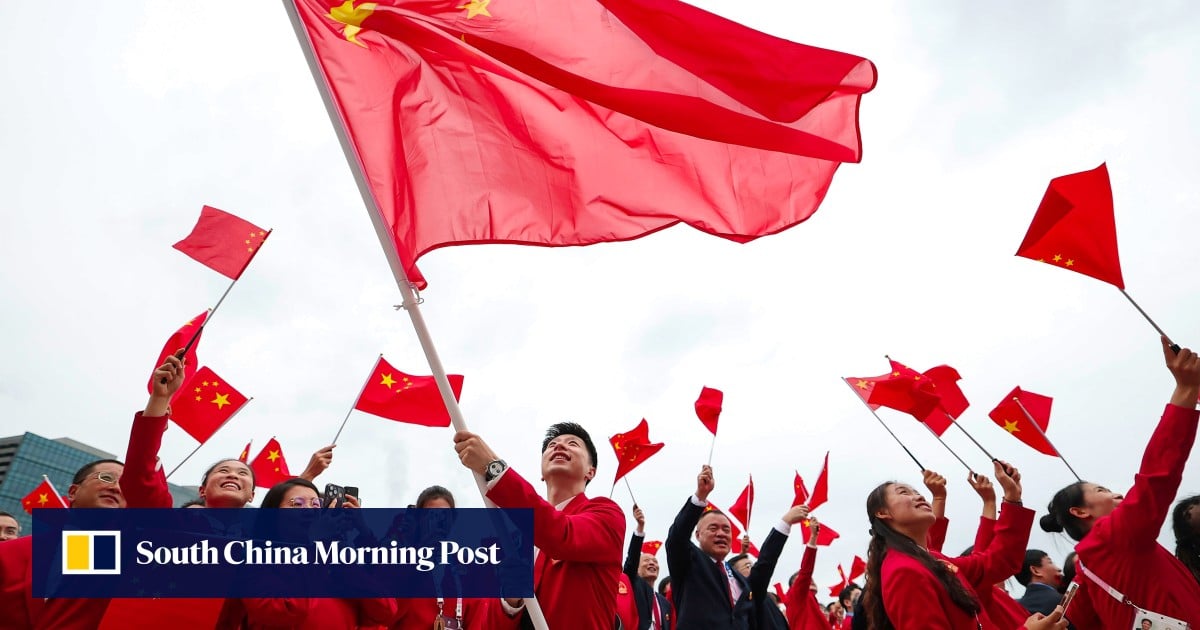
A state think tank has outlined the president’s vision for sport in China, saying it is driving a push for fair competition and a more “just and reasonable” global sports order with a greater voice for developing nations.
In its report on Xi Jinping Thought on sport, the Xinhua Institute – under official news agency Xinhua – also highlighted the Chinese leader’s call for “zero tolerance” of doping.
The report, released on Tuesday, marks the first time Xi’s ideology on sport has been laid out, adding to his political doctrine on culture – unveiled in October – and on the economy, diplomacy, military, environment and legal affairs.
“The sporting values of fair play, compliance with the rules and respect for opponents can also be used to guide the construction of human political, economic and social life. This is particularly meaningful in the field of great power competition,” the report said.
“Besides using fair sporting competitions to demonstrate fair political competition, the deeper meaning of promoting justice through sport is to promote the building of a more just and reasonable new international sports order.”
The report said that under Xi’s leadership China had been more involved in international sport and hosted more large-scale events. It said there were more Chinese on international sporting bodies and that the nation’s influence and voice in global sports governance had increased.
It also suggested that the world’s political and economic centre of gravity was shifting towards developing countries and this was also the case in sport as more nations in the Global South won the right to host the Olympics and other major events.
“In these remarkable changes in global sports governance, China is an important force for change,” the report said, pointing to the influence of the 2008 Beijing Olympics.
It comes after China had its most successful overseas Olympic Games in Paris, winning 40 gold medals to finish level with the United States. The team won 91 medals overall – just one fewer than in London in 2012 and the most outside the 2008 Beijing Olympics, when China won 48 gold medals and 100 medals in total.
Last week Xi praised the Chinese team for their performance in the Paris Games, which wrapped up on August 11. “You have won gold medals for morality, conduct and integrity, and have demonstrated sportsmanship and earned broad respect and recognition,” Xi said.

Responding to the think tank report in Hong Kong on Wednesday, Regina Ip Lau Suk-yee, convenor of the decision-making Executive Council, said China had become a major sporting nation and was “well-positioned” to take the lead on organising international events.
“China could [make] a pitch to host the Olympic Games in 2036 or 2040 and hold them in the Greater Bay Area, which has plenty of outstanding athletes and world-class sporting facilities,” Ip said, referring to the plan to create an economic business hub linking Hong Kong, Macau and nine cities in Guangdong province.
She said Hong Kong could host some events since it had international-standard facilities and growing community support for sports, spurred on by the performance of the city’s athletes.
Hong Kong’s delegation won a record two gold and two bronze medals at the Paris Olympics.
China’s National Games – held every four years – will be hosted by Guangdong, Hong Kong and Macau in 2025.
Ip has previously suggested that the Greater Bay Area could also host a “Belt and Road Games” to strengthen ties with the more than 100 countries involved in the trade and infrastructure initiative.
The Hong Kong Sports Economy & Tourism Summit, which will be hosted by the Post next month, will explore the city’s role in becoming Asia’s mega event capital.
Lobo Louie Hung-tak, a senior lecturer in health and physical education at the Education University of Hong Kong, said the city could also help bring more international sporting events to mainland China, noting that cities in the Greater Bay Area were easily accessible and could offer bigger venues.
“We can collaborate by using the good management system in Hong Kong and facilities in mainland China,” Louie said.
The Kai Tak Sports Park – which is expected to open early next year – will be Hong Kong’s biggest such facility with a 50,000-seat main stadium. That compares to the 80,000-seat Guangdong Olympic Stadium in Guangzhou and the 60,000-seat Shenzhen Universiade Sports Centre.
03:28
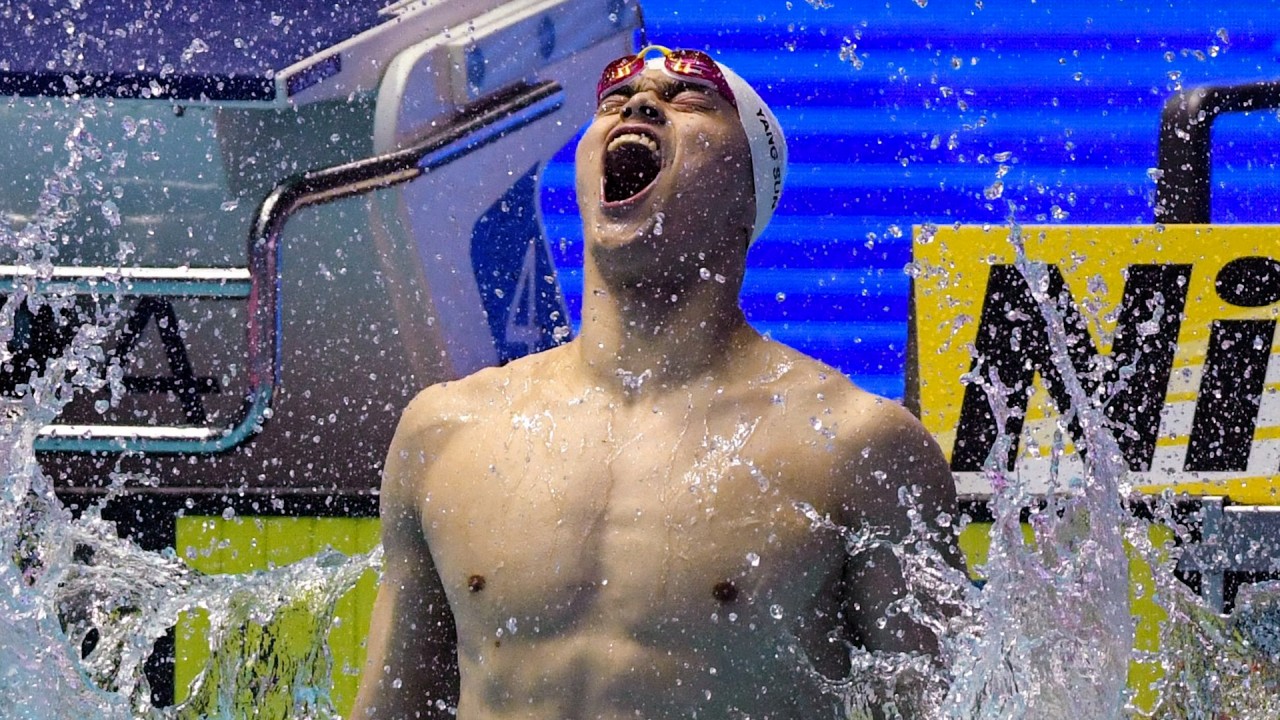
Chinese swimming star Sun Yang wins first gold medal after 4-year suspension
Chinese swimming star Sun Yang wins first gold medal after 4-year…
Read More: Report outlines Xi’s push for fair competition and more ‘just’ global sports