


What to know about the exchange of fire between Israel and Hezbollah
- Israel and the Hezbollah militant group launched their heaviest exchange of fire after months of strikes and counterstrikes. By mid-morning Sunday, it appeared to have ended, with both sides saying they only aimed at military targets.
- Authorities in Lebanon said the Israeli strikes killed three people, while Israel said one of its soldiers was killed.
- President Biden is closely monitoring the events in Israel and Lebanon. “At his direction, senior U.S. officials have been communicating continuously with their Israeli counterparts,” National Security Council spokesperson Sean Savett said in a statement.
Here’s a look at where things stand:

JALAA MAREY/AFP via Getty Images
What happened early Sunday?
The situation between Israel and the Hezbollah militant group remains tense. The exchange of fire between the two early Sunday threatened to trigger a broader region-wide war that could torpedo ongoing efforts to forge a cease-fire in Gaza.
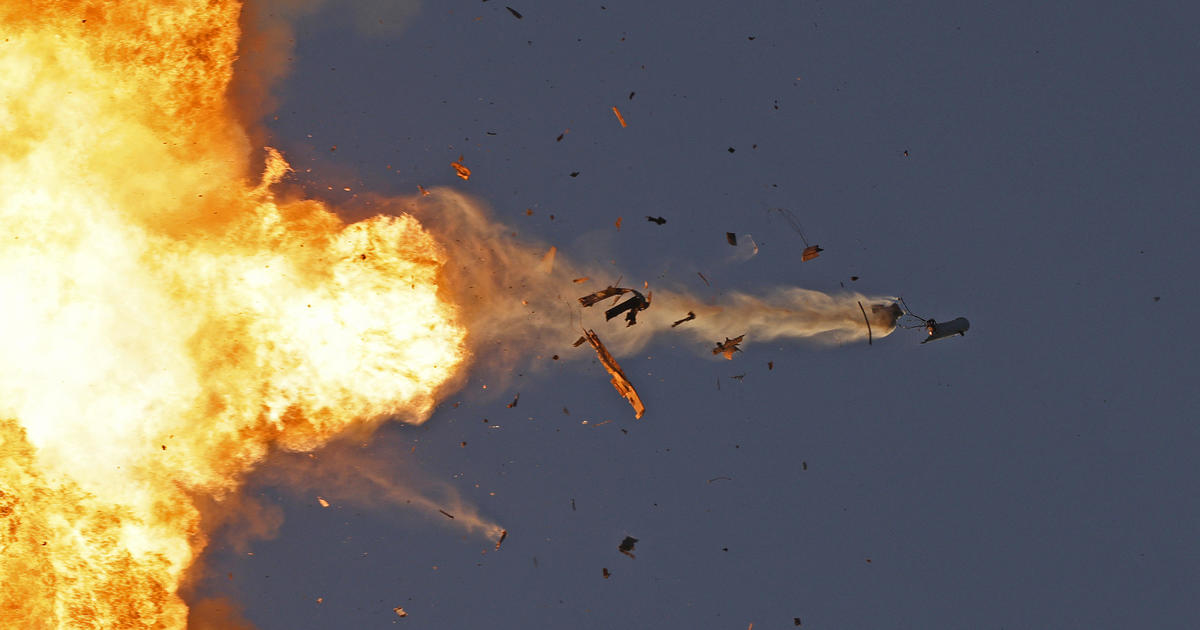
The Israeli military said around 100 warplanes launched the airstrikes targeting thousands of rocket launchers across southern Lebanon. It said it struck because Hezbollah was planning to launch a heavy barrage of rockets and missiles toward Israel. Soon after, Hezbollah announced it launched an attack on Israeli military positions with a large number of drones. The Iranian-backed group had been promising for weeks to retaliate for Israel’s assassination of Fouad Shukur, one of its founding members, in Beirut last month.

KAWNAT HAJU/AFP via Getty Images
By mid-morning, it appeared that the exchange had ended. At least three people were killed in the strikes in Lebanon, while Israel said one servicemember, Petty Officer 1st Class David Moshe Ben Shitrit, 21, was killed in northern Israel. Two other soldiers were “lightly and moderately injured,” Israel said.
“Approximately ninety percent of the targets struck were short-range rockets aimed at northern Israel,” Israel Defense Forces spokesperson Daniel Hagari said in a statement on Sunday, adding, “Hezbollah planned to harm Israeli civilians.”
Israeli Prime Minister Benjamin Netanyahu, speaking at the start of a Cabinet meeting, said the military had eliminated “thousands of rockets that were aimed at northern Israel” and urged citizens to adhere to directives from the Home Front Command.
“We are determined to do everything to defend our country, to return the residents of the north securely to their homes and to continue upholding a simple rule: Whoever harms us — we will harm them,” he said.
What was involved in the attack
Lt. Col. Nadav Shoshani, an Israeli military spokesman, said Hezbollah had intended to hit targets in northern and central Israel. He said initial assessments found “very little damage” in Israel, but that the military remained on high alert. He said around 100 Israeli aircraft took part in Sunday’s strikes.
“Hezbollah managed to launch only about two hundred and thirty rockets and over twenty unmanned aerial vehicles,” Hagari said on Sunday. “Most of them either fell on their way to Israeli territory, landed in open areas, or were intercepted by Israeli Air Force defense systems and Israeli Navy ships.”
Hezbollah said its attack involved more than 320 Katyusha rockets aimed at multiple sites in Israel and a “large number” of drones. It said the operation was targeting “a qualitative Israeli military target that will be announced later” as well as “enemy sites and barracks and Iron Dome (missile defense) platforms.”
Hezbollah later announced the end of what it said was the first stage of retaliatory strikes, which it said would allow it to launch more attacks deeper into Israel. But a later statement said “military operations for today have been completed.”
Air raid sirens were reported throughout northern Israel and the Israel Airports Authority briefly suspended flights in and out of Ben Gurion International Airport due to the threat of attack. Flights that were already en route to Ben Gurion were diverted to other airports.
Israel’s Home Front Command raised the alert level in northern…
Read More: Israel and Hezbollah exchange strikes before pulling back, jolting region amid