


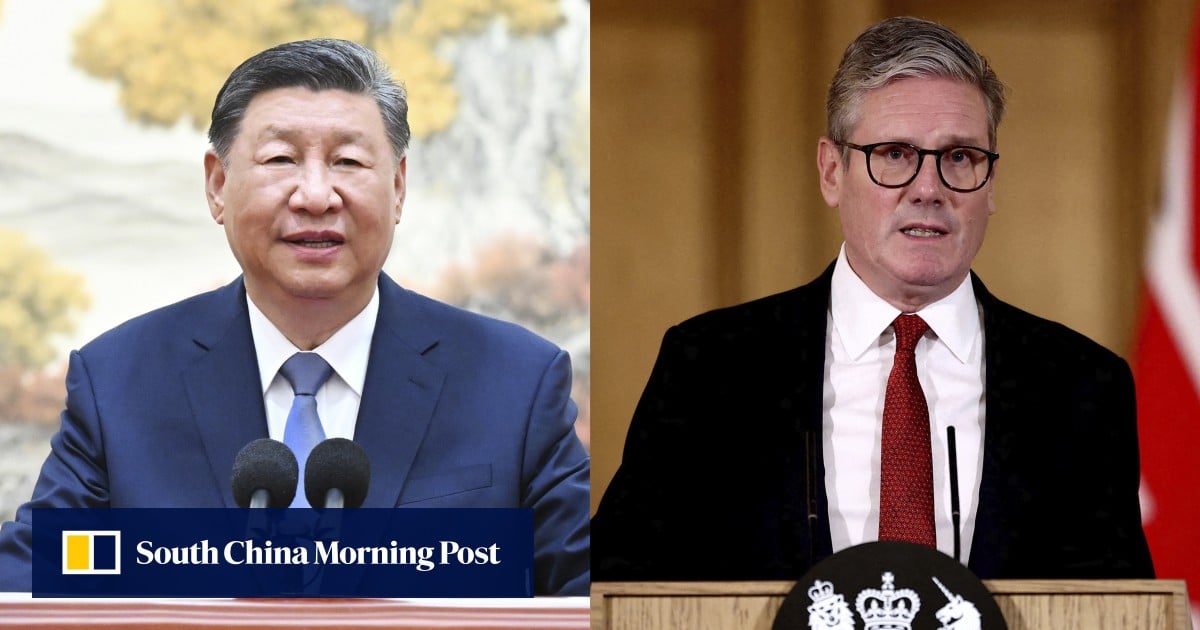
Xi said China attached great importance to Britain’s desire to step up engagement and dialogue, and was willing to maintain exchanges with the British side at all levels to promote stable and far-reaching China-UK relations.
He said the two countries could expand cooperation in finance, the green economy, artificial intelligence and people-to-people exchanges.
06:27
‘Full audit’ of Sino-UK ties as new Labour Party government looks for reset in bilateral relations
‘Full audit’ of Sino-UK ties as new Labour Party government looks for reset in bilateral relations
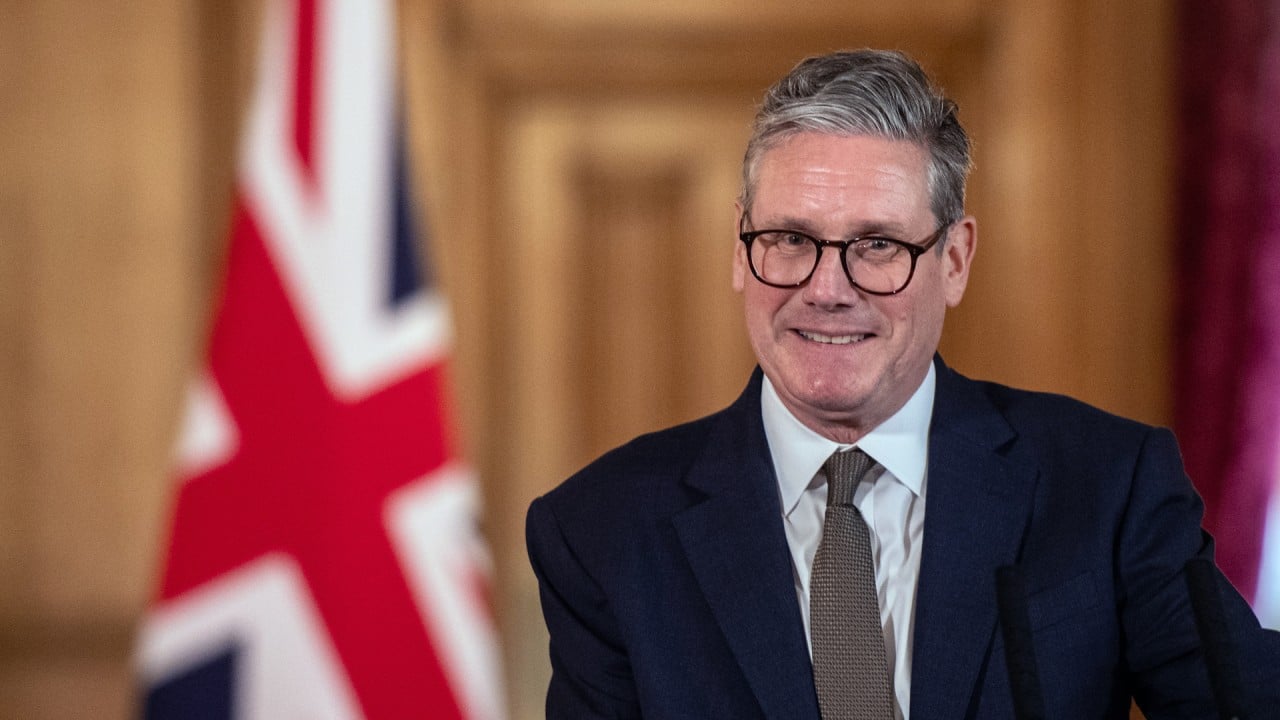
According to the Chinese foreign ministry, Starmer said that developing a closer relationship was in the long-term interests of both countries and he expressed hope of cooperation in a range of areas from the economy to clean energy and climate change.
He said that Britain’s adherence to the one-China policy had not changed and congratulated China on its success at the Paris Olympics, the ministry said.
The British prime minister’s office said Starmer began by setting out his priorities for his government, including national security, secure borders and economic stability.
As permanent members of the UN Security Council, the leaders agreed on the importance of close working in areas such as climate change and global security, it said.
Starmer added that he hoped the leaders would be able to have “open, frank and honest” discussions to address and understand areas of disagreement when necessary, such as Hong Kong, Russia’s war in Ukraine and human rights.
03:26
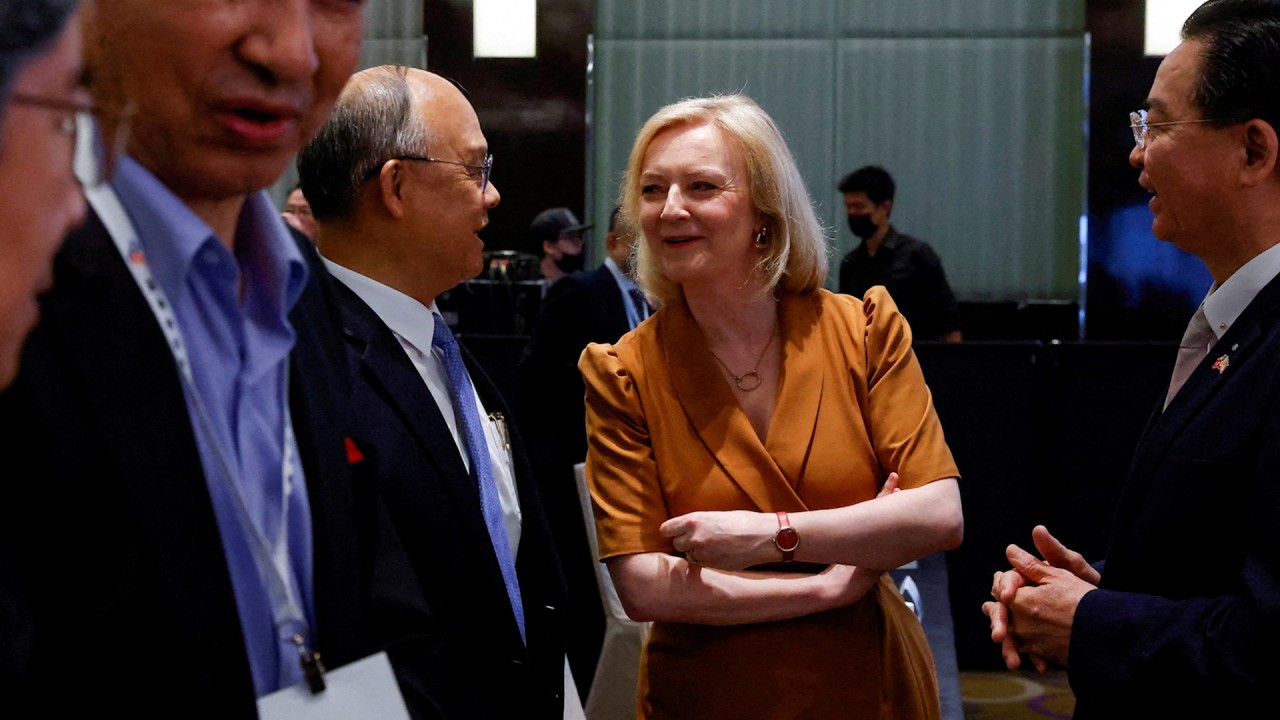
Beijing slams Taiwan visit by British ex-PM Liz Truss as ‘dangerous political show’
Beijing slams Taiwan visit by British ex-PM Liz Truss as ‘dangerous political show’
Last month, Chinese Premier Li Qiang, China’s No 2 leader under Xi, congratulated Starmer on becoming British prime minister.
According to state news agency Xinhua, Li said in his congratulatory message to Starmer that the Chinese government “attaches great importance to its relationship with Britain”, and stood ready to work with Starmer’s government to consolidate mutual political trust and expand mutually beneficial cooperation.
British Foreign Secretary David Lammy is reportedly considering a visit to China, with the groundwork laid by Catherine West, the minister responsible for the Indo-Pacific.
West travelled to Beijing in March as part of a parliamentary delegation that met China’s fourth-ranking official Wang Huning, one of Xi’s closest advisers, and foreign vice-minister Deng Li.
Starmer’s Labour government is also expected to announce its review of the country’s China strategy within the administration’s first 100 days, although there has been no commitment on delivering a “China strategy” document.
China, which is already engaged in a show of strength with the US military in the western Pacific, is closely watching the expected deployment of the British carrier strike group to the Indo-Pacific next year as part of a plan announced by former UK defence secretary Grant Shapps late last year.
When asked if British military ships had the right to transit the Taiwan Strait, Shapps said freedom of navigation was universally recognised and included the Taiwan Strait. But he pointed out that the strike group’s exact route had yet to be finalised.
Read More: In call with UK’s Keir Starmer, China’s Xi Jinping urges long-term view of ties