


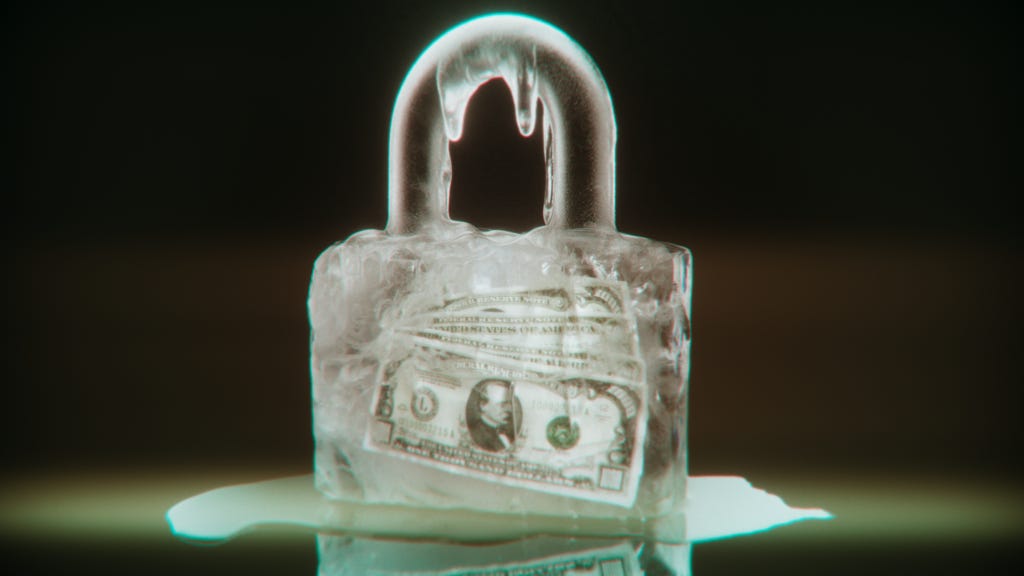
I mulled over freezing my credit for weeks before I did it. As a personal finance editor covering identity theft, I knew it would make it harder for cybercriminals to open a new credit account in my name — but it would also make it difficult for me.
When you freeze your credit, you have to manually unfreeze or “thaw” it whenever you want to apply for a new credit card, car loan or mortgage.
The process of freezing your credit isn’t so straightforward either. It involves signing up for individual accounts with the three main US credit bureaus, Equifax, TransUnion and Experian and freezing your credit manually online or by phone or mail.
But there are two benefits that sold me on it. First, freezing your credit is absolutely free. And second, you get peace of mind in knowing you’ve neutralized a major tool in identity thieves’ playbook.

Aura
CNET’s pick for the best identity theft protection service
Lock your credit and safeguard your sensitive data.
Why I froze my credit reports
Data breaches happen more often than you think. And chances are, your data has been compromised at least once. Just this year, Ticketmaster and AT&T reported data breaches that have impacted millions of customers. An alleged hack of background search company National Public Data may have also compromised the personal data of 2.9 billion people, according to a new lawsuit.
Recently, I noticed an uptick in the amount of scam messages I received on my phone and in my email inbox. Most were easy enough to sniff out, but some were fairly well researched.
I’ve received a variety of messages asking me out for ribs and even offering me new job opportunities. The barrage of messages, phone calls and emails made me think that at any given moment — while distracted or in a rush to get back to my desk for my next meeting– I may fall victim to a scam that could lead to identity theft.
Freezing my credit is one of the best ways to protect your data and money — but it’s not foolproof. Fraudsters and identity thieves might still gain access to my personal information via existing accounts. However, I can limit the damage.
Read more: 5 Signs Your Personal Data Is on the Dark Web — And What You Can Do About It
How I froze my credit with TransUnion, Equifax and Experian
When you freeze your credit, you’ll need to do it with each of the three main credit bureaus. That requires setting up accounts at each — a process that took about 30 minutes online. Generally, you’re asked for the same information: your name, birthday and the last four digits of your Social Security number. You then need to complete two-factor authentication via text or email.
TransUnion and Equifax have dedicated tabs available to you on your dashboard to freeze your credit after you create an account. A few clicks, and I was all set.
Experian makes this option a bit more difficult to find. After some clicking around, I found two ways to activate a free security freeze.
You can hover over “credit” on your dashboard and click Experian Credit Lock — Experian’s paid offering that works similar to a credit freeze, but that among other features locks your credit report instantly. On that page, you see the free “security freeze” option.

Screenshot by Danni Santana/CNET
You can also scroll down to the bottom of the page while signed in and click Experian Credit Lock to get to the same page. All three credit bureaus will confirm your credit freeze via email.
If you don’t want to set up online accounts, you can call each credit bureau to freeze your credit. Here are the numbers for each:
- TransUnion – 800-916-8800
- Equifax – (888) 298-0045
- Experian – 888-397-3742
After you’ve requested a credit freeze, each bureau must freeze your credit within one business day. When you need to unfreeze your credit, Experian, TransUnion and Equifax are required to thaw your credit within an hour. By mail, it may take up to three business days to freeze and unfreeze your credit.
Freezing your credit won’t solve all of your identity theft worries
Setting up the credit freeze was simple enough. But I’m not going to tell you that having your credit frozen is convenient. Here are some downsides to consider:
You’ll have to unfreeze your credit every time you open a new account
If you are thinking of applying…
Read More: Looking to Freeze Your Credit After the National Public Data Breach? Here’s How