


In 2022, Mongolia and Australia celebrated the 50th anniversary of establishing diplomatic relations. Despite the geographical distance, Ulaanbaatar and Canberra have successfully established strong bilateral cooperation in areas like education, mining, gender equality, civil society, and defense.
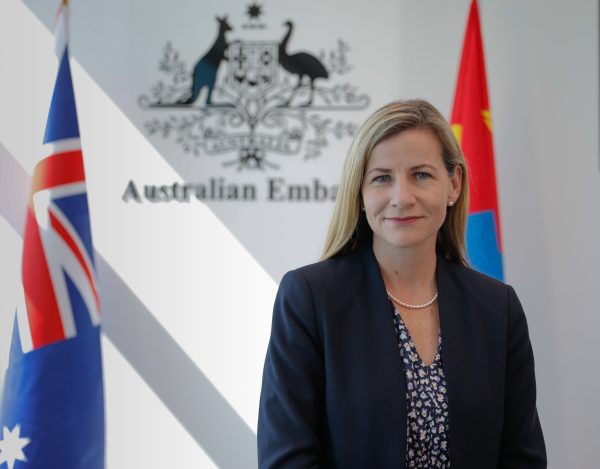
The Diplomat spoke to Katie Smith, ambassador of Australia to Mongolia, on the two countries’ ever-growing bilateral relations.
Considering the growing bilateral relations between Mongolia and Australia, what are some of the ongoing and upcoming major projects?
Over 52 years of unbroken diplomatic relations, Australia and Mongolia have an enduring partnership built on mutual respect and shared interests with strong economic, security, education, and people-to-people ties. Our two countries are located in an increasingly uncertain region, and we value Mongolia as an Indo-Pacific partner. I see our relationship as going from strength to strength. As Australian ambassador, it’s an honor to contribute to advancing our relationship to the next level.
Mongolia has great potential with its dynamic young population, commitment to democracy and natural resource endowments. That is why we’ve seen it as vital to invest in supporting Mongolia’s human capital.
Our education linkages are growing. Our Australia Awards scholarships to Mongolia have been running for over 30 years with 750 alumni. I was so pleased to be able to announce an increase of 50 percent to 15 awardees this year and hope to increase this number again next year.
These alumni, our “Mozzies,” are making remarkable contributions to Mongolia’s development in the Parliament, government, civil society, and private sector. They have inspired thousands more Mongolians to study in Australia, including around 9,000 this year. We are also planning to start a new program to support technical and vocational education and training in Mongolia to help build a competent workforce that will meet the emerging needs of the labor market.
Australia has a long-standing commitment to gender equality and the human rights of women and girls. In Mongolia, I’m very proud of our ground-breaking Women’s Leadership Program. The program assists our Australian alumni to improve their leadership skills, succeed professionally, and help participants deal with gender barriers in the workforce.
The Australian Volunteers program is another development program that strengthens people-to-people links between our two countries. Currently, we have 18 volunteers working with Mongolian organizations across a range of sectors. We’ve assigned volunteers to provide English language training to public school teachers, in support of the Mongolian government’s new policy to implement English as the second language in education.
Australia also has a small flexible grants program that supports social and economic issues important to achieving national and subnational development. Through this program, Australia has assisted more than a hundred Mongolian organizations to implement over 130 projects in priority areas of gender equality, disability inclusion, youth empowerment, and environment.
Australia and Mongolia will partner to tackle our common challenge of climate change. We’re planning to work with our partners to enhance women’s climate resilience as well as support our Australian Center for International Agricultural Research to start a project in sustainable grasslands management.
Our two countries also actively cooperate in areas of global and regional security and peacekeeping. Australian security experts and defense officials regularly participate in the Ulaanbaatar Dialogue and peacekeeping and humanitarian exercises such as Khaan Quest and Gobi Wolf.
An important part of our defense cooperation is long-term and short-term training programs for Mongolian defense personnel in Australia, and we’ve been running English language training programs for the Mongolian Armed Forces since 2018, which we’re increasing this year.
Mongolia’s dependency on its mining sector has been discussed for decades now. Australia is also a major mining economy. In your view, what are some of the important experiences Mongolia can adopt to diversify the country’s economy?
As Australia is a strong partner in the resources sector, it is encouraging to see Mongolia leverage its large endowment of natural resources to sustain strong growth in its mining sector. Minerals exports have and will continue to be a main driver of Mongolia’s economic growth for the foreseeable future. Mining plays a significant role – it provides direct and indirect employment, boosts education and skills development, and advances social progress.
As alluded to in your question, the economic…
Read More: Australia’s Ambassador to Mongolia on Cooperation in Mining, Civil Society,