


Some 3,000 sq km of additional land is being acquired in the arid region for subsequent expansion and downstream industries, said James Leong, co-founder of Climate Impact Corporation, a Sydney-based firm formed in 2022, which is developing the project.
“Australia has plenty of flat terrain and we have the best infrastructure – railways and highways,” said the Hong Kong-based private equity veteran. “The beauty of hydrogen is that it can be reshaped into downstream products needed by different industries.”
Hydrogen, a highly flammable gas with a low energy density, is difficult and expensive to transport over long distances. This can be addressed by processing it into easy-to-transport products such as methanol and ammonia that are being piloted in ships and power plants.

Alternatively, the green hydrogen can be turned into methane through a complex process, as the Green Springs project envisages. The company proposes to transport the component of natural gas via existing gas infrastructure.
Green Springs plans to deploy European and American equipment to extract moisture from the air to overcome water scarcity in the region, and Chinese equipment to produce solar energy and hydrogen. It takes nine tonnes of water to produce one tonne of hydrogen.
The heat generated from the process will power a separate set of equipment to capture carbon dioxide from the atmosphere to chemically react with the green hydrogen to produce water and methane. Combusting this “renewable” methane is carbon-neutral.
Climate Impact is in talks with a large Japanese utility, which wants to procure green methane to replace liquefied natural gas for its power plants, Leong said.
“Japanese and South Korean shipping, power and steel companies are seeking low-carbon fuels and chemicals,” he said. “Some want green ammonia, some want green methanol and others green methane.”
Climate Impact last month formed a non-binding agreement with US-based GE Vernova – formerly part of General Electric – to collaborate on designing green hydrogen manufacturing modules. They have set a target to produce 500,000 tonnes of hydrogen annually at US$2 per kg. The current cost of producing green hydrogen is estimated at about US$4.50 to US$4.60 per kg, according to the Hydrogen Council, an initiative launched at the World Economic Forum in 2017.
The company is trying to persuade Chinese and European electrolyser makers – including Sungrow Power System from China’s Anhui province – to set up shop in Australia, Leong said.
He is also in talks with Japanese, European and Asian banks for loans to cover 70 per cent of Green Springs’ cost, with low-carbon energy funds, and sovereign and pension funds taking the rest as equity stakes.
Climate Impact is not the only start-up that has proposed a mega green hydrogen project down under.
In March, global energy titan BP raised its bet on the Australian Renewable Energy Hub, one of the world’s most ambitious green hydrogen projects, which has been under planning since 2014.
BP increased its stake in the project to 64 per cent, acquiring a 15 per cent stake held by Macquarie Capital and the Australian bank’s Green Investment Group for an undisclosed sum. BP has set its sights on capturing 10 per cent of the global hydrogen market.
The US$36 billion project, spread over 6,500 sq km in Western Australia, aims to build some 26GW of solar and wind farms to power 14GW of electrolysers to produce 1.6 million tonnes of hydrogen annually.
Since 2019, when the Australian government unveiled a strategy to turn the nation into a low-carbon-energy superpower, more than 100 hydrogen production and associated projects worth US$127 billion have been announced.
At least 80 are green hydrogen projects, with 15 having passed final investment decisions for work to start.
In February, the federal and Western Australia governments agreed to invest A$140 million (US$93.4 million) by mid-2028 on a training and research institute and port upgrades to handle large renewable energy equipment.
Meanwhile, the federal government’s budget last month included A$8 billion of financial support – mainly tax incentives – over 10 years for renewable hydrogen production.
00:47
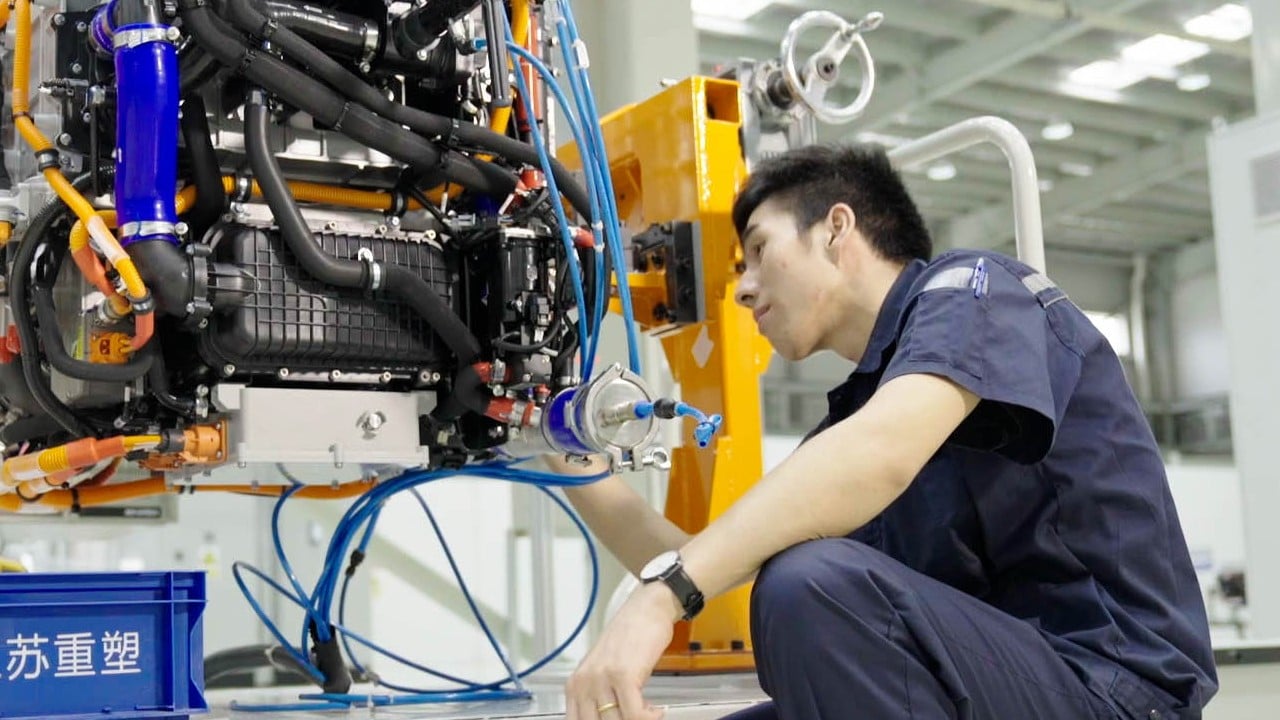
Green hydrogen: can China reclaim its glory in EVs, batteries and solar panels?
Green hydrogen: can China reclaim its glory in EVs, batteries and solar panels?
On the demand side, the Japanese government in February passed new legislation to provide subsidies to green hydrogen producers and importers, by funding the price difference between hydrogen and natural gas.
“Unlocking this sort of finance is critical to allow green hydrogen to enjoy…
Read More: Green hydrogen: is this Australia’s breakout moment amid US$127 billion boom