


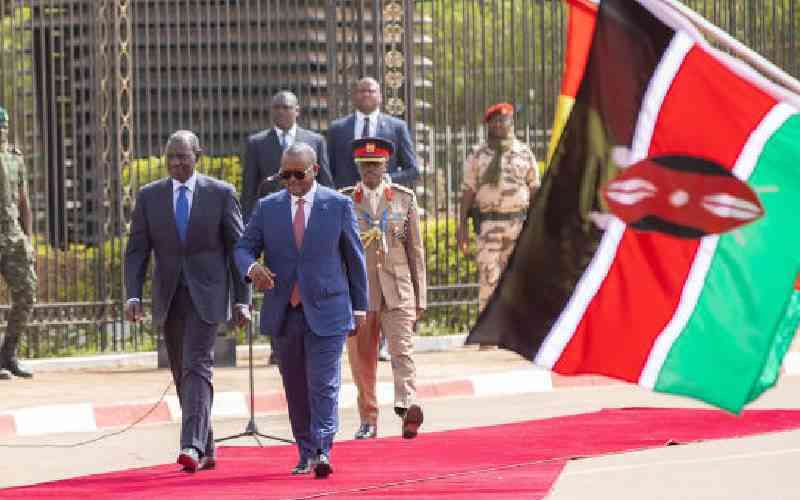
Looking at his political chessboard and how he has been playing the all-telling game, keen political observers may have noted that President William Samoei Ruto could perhaps be an emerging political enigma of Kenya’s politics.
In less than two years of his first term in office, Kenya’s 5th President has managed to amass what could be seen as an expansion of his reach and control with little or no obstructions in the way he wants things done.
And now, it only takes his goodwill not to be a Kenyan strongman.
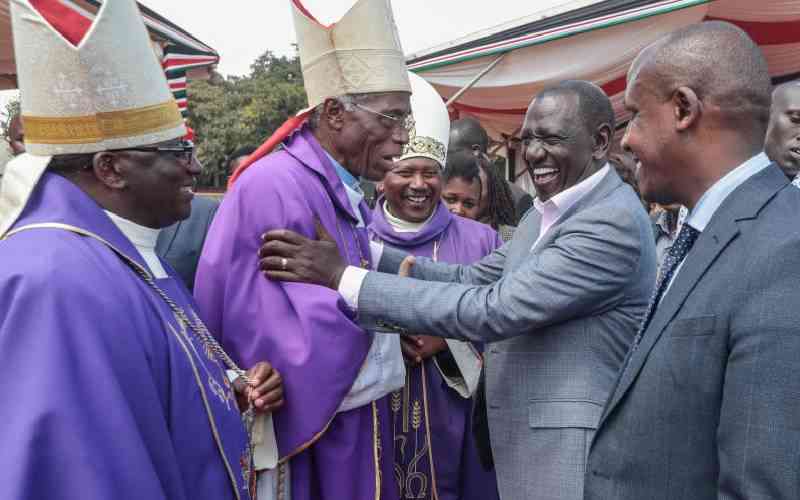
Despite the safeguards of the 2010 Constitution, today’s Parliament has become his political Pentecostal echo chamber, a wussy Opposition that looks disgruntled, an ailing civil society, a confused clergy that is more of the Head of State’s choir, a Judiciary that is ready to hold talks with him at State House following strong critique by him and signs of playing a Machiavellian game of independent media.
The recent assault on the independent media, which the government has denied advertisements, could be one of the last attempts in the absolute consolidation of power and the muzzling of ‘unwanted noise’.
Ruto’s political coalition has 201 legislators in the National Assembly, a near absolute majority especially after retired President Uhuru Kenyatta’s Jubilee party MPs quickly played ball, running away from their opposition coalition, Azimio, and pledging allegiance to Ruto’s Kenya Kwanza administration. Today, in Kenya’s Parliament, there is little or almost no impediment to what the President wants passed. Passage of the controversial Finance Act 2023, followed by succeeding laws that have loaded Kenyans with a heavy tax burden can be cited as good case study in this debate.
A hands-on President, Ruto, sources indicate, has in the past personally called legislators including some from the Opposition when he wants his business in the House given a nod.
Unlike his predecessor Uhuru Kenyatta, Ruto enjoys a warm political relationship with the legislature that he controls and in the last nearly two years in office, no Bill has stalled in the bicameral Parliament. The best the minority side has done has been to walk out as happened during the passing of the Affordable Housing Bill in March.
During his visit to Parliament during the State of the Nation address last year, parliamentarians in the government coalition and those in the opposition fell over their feet to get the President’s eye.
But it is his maneuvers around the independence of the Judiciary, which has looked to be the last remaining independent institution since the dawn of the 2010 Constitution, that is politically dazzling.
A year into his presidency, Ruto’s government suffered several blows following rulings by the Judiciary that seemed to halt a number of the president’s flagship projects including the Affordable Housing Programme, the revamping of healthcare, and a series of other projects that left Ruto jilted.
While speaking at at a funeral in Nyandarua county in January, President Ruto said that he would begin ignoring court orders, a warning that jolted the Judiciary after he accused some judges of being part of a cartel that is conspiring to frustrate government programmes.
“We will not allow these people to derail our plans,” he said as he directed Roads Principal Secretary Joseph Mbugua to move with speed and allocate funds for the construction of a road in Nyandarua County which had stalled following a court order.
Driven to the wall by Ruto’s tough call, the Judiciary in a statement signed by none other than Chief Justice Martha Koome admitted that there were suspects of corruption within the bench. That was followed by accepting to join a meeting at State House chaired by the President.
Stay informed. Subscribe to our newsletter
Immediately thereafter, Azimio la Umoja Leader Raila criticised the Ruto and Koome meeting, terming it an irresponsible move. Raila noted that such a meeting should have happened at a neutral place.
“State House is the home of the Executive. That is where the president resides. If there is going to be a dialogue over issues of governance, it should be held on a neutral ground,” he said.
Despite hard hitting criticisms from the opposition, Ruto on Monday, January 22, 2024, held the planned meeting with Koome, after the two arms…
Read More: Making of an all-powerful presidency: Ruto consolidates, expands power as